
A fountain pen is not merely a writing instrument, but a refined companion capable of transforming every gesture into an elegant and personal experience.
At the heart of this experience lies the nib, the essential element responsible for smoothness, precision, and writing pleasure.
Understanding how to clean fountain pen nibs is fundamental for preserving their performance, durability, and writing quality over time. Proper maintenance ensures a consistent ink flow while preventing clogging, residue buildup, and interruptions in writing.

Pineider nibs: materials and craftsmanship
Every nib is designed to create a direct connection between hand, ink, and paper.
Pineider primarily distinguishes between two types of nibs.
The stainless Steel nib offers:
- Durability
- Reliability
- Precision
- Consistent writing performance
They are ideal for everyday use and for writers seeking stable and dependable writing instruments.
The renowned Quill Nibs 14 kt gold provide a softer and more responsive writing experience.
Their main characteristics include:
- Greater nib sensitivity
- Subtle elasticity
- Generous ink flow
- Dynamic response to hand movement
The result is a fluid, elegant, and naturally expressive writing experience.
Fountain pen nib sizes and writing styles
Different nib grades allow fountain pens to adapt to individual writing preferences and styles.
Main nib sizes
- Extra Fine (EF) for extremely precise lines
- Fine (F) for elegant and controlled writing
- Medium (M) for balanced smoothness and versatility
- Broad (B) for richer and deeper strokes
- Stub (S) for line variation and expressive character
Each nib changes the interaction between paper, ink, and movement, transforming writing into a unique sensory experience.
How to clean fountain pen nibs properly
Knowing how to clean fountain pen nibs correctly is essential for preserving both the functionality and beauty of the writing instrument.
Routine cleaning should be performed regularly, especially:
- When changing ink
- After long periods of inactivity
- If ink flow becomes inconsistent
- When residue or clogging appears
For regular maintenance, it is recommended to:
- Remove the cartridge or converter
- Disassemble the writing unit if possible
- Immerse the nib in room temperature water
- Prefer distilled water when available
- Avoid aggressive chemical products
The ink will gradually dissolve into the water. To facilitate the process, you may gently use:
- A pipette
- A syringe without a needle
Rinsing should continue until the water becomes completely clear.
Proper drying after cleaning
After washing, the nib must be dried carefully. It is recommended to:
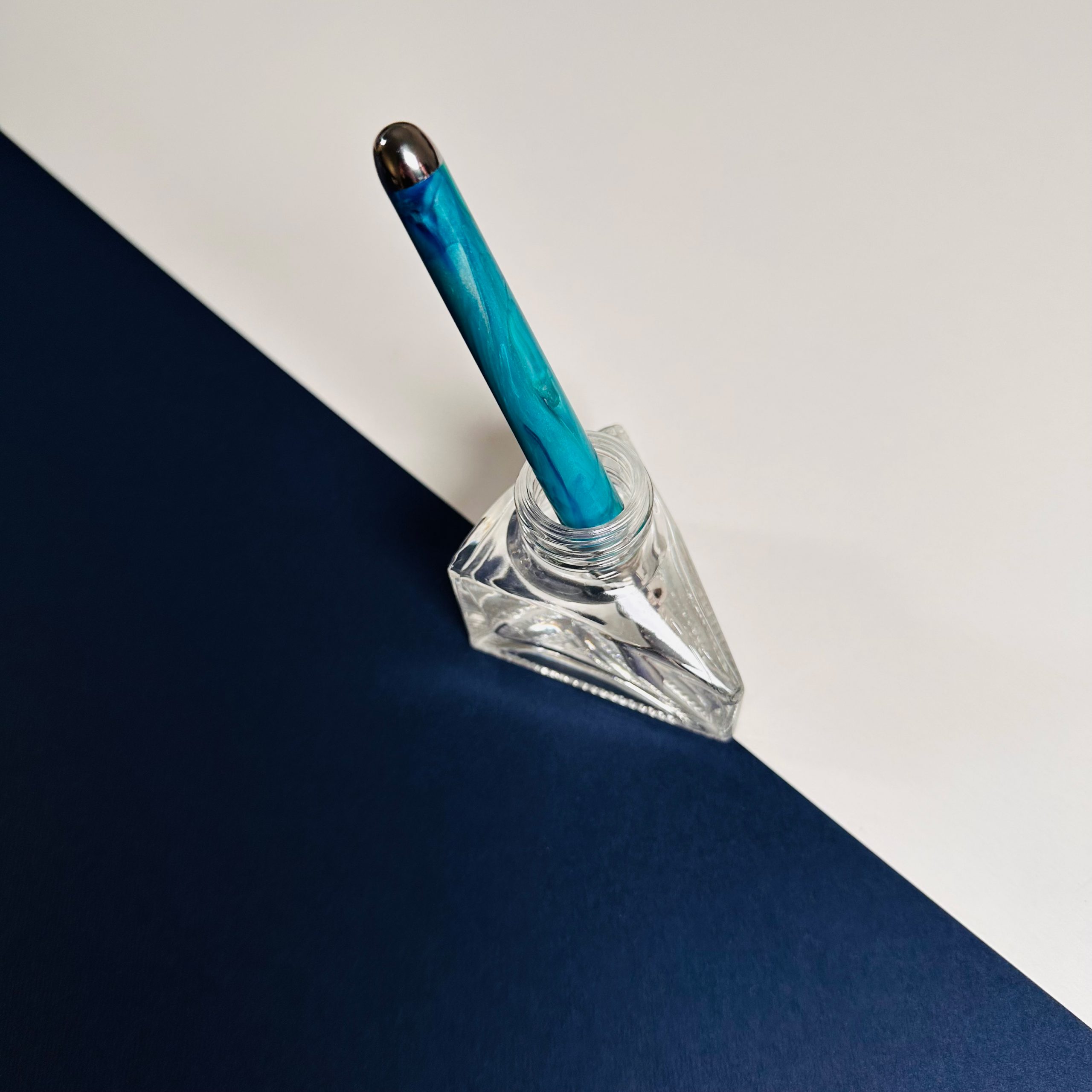
- Place the nib upright
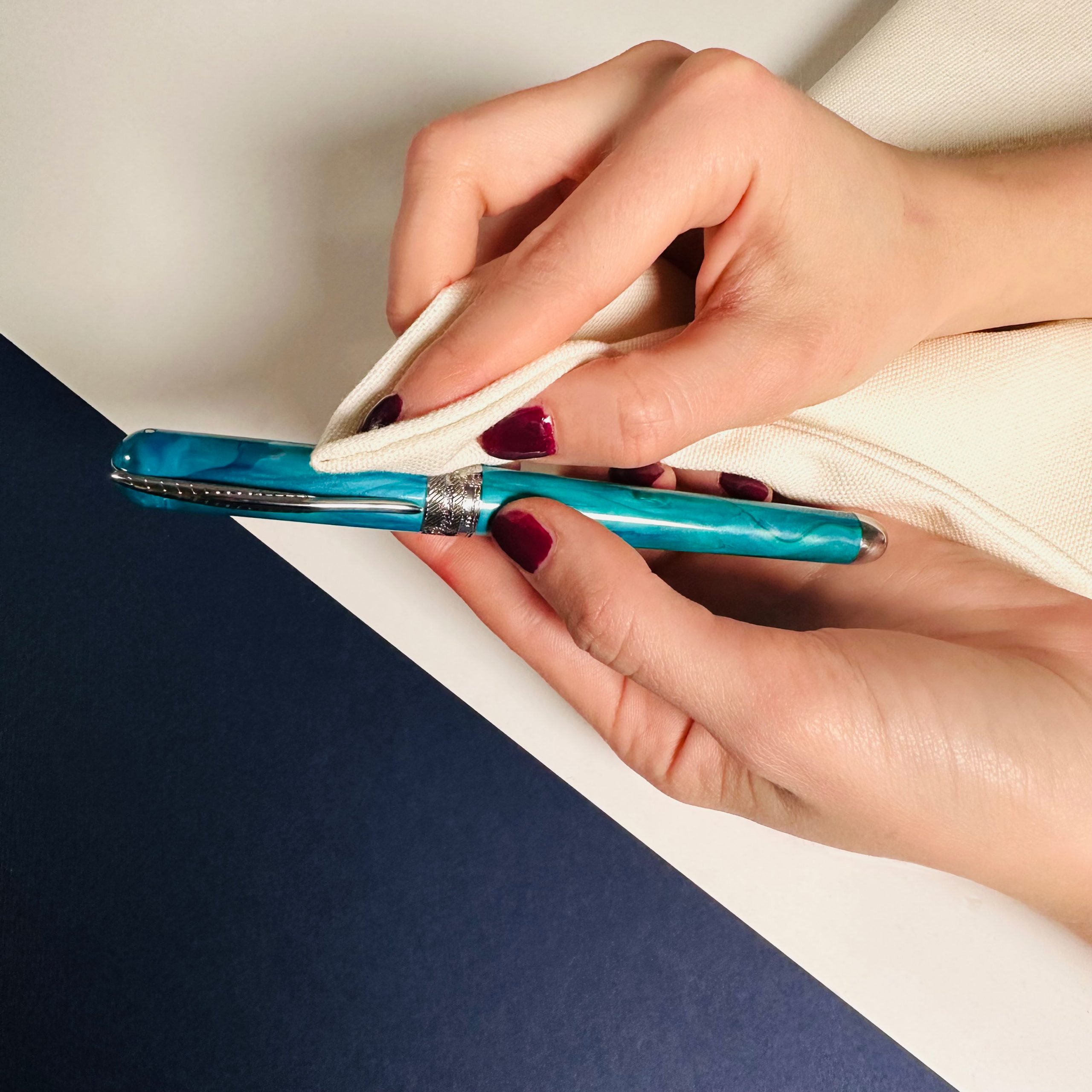
- Use a soft absorbent cloth
- Allow residual moisture to evaporate naturally
Proper drying prevents water accumulation and protects the internal components of the fountain pen.
Deep cleaning for clogged fountain pens
When a fountain pen remains unused for extended periods or develops stubborn ink deposits, a more thorough cleaning becomes necessary:
- Disassemble the barrel, section, and ni
- Soak components separately in wate
- Replace the water multiple time
- Remove all remaining ink residue completely
For persistent buildup, a mild cleaning solution may be used:
- Approximately 250 ml of water
- Approximately 5 ml of vinegar
An overnight soak can help dissolve stubborn ink deposits without damaging the pen’s materials.
After soaking, all components should be:
- Carefully rinsed
- Completely air dried
- Positioned vertically while drying
Daily habits that preserve fountain pen nibs
Simple daily habits significantly improve the longevity and writing quality of fountain pens:
- Store the pen with the nib facing upward
- Release a few drops after refilling
- Clean the feed carefully after use
- Use high quality fountain pen ink
- Write regularly to maintain smooth flow
These small precautions help prevent clogging while preserving smooth and elegant writing performance.
Cleaning fountain pen nibs as part of the writing tradition
Cleaning a fountain pen is not only about maintaining functionality. It is also part of a tradition rooted in craftsmanship, attention, and the appreciation of fine writing instruments.
In a fast paced digital world, caring for a fountain pen restores value to slower gestures and to objects designed to last over time.
Because writing with a fountain pen is not simply a habit, but an experience that combines technique, elegance, and personal expression.