The history of the nib is, ultimately, the history of writing itself. A journey spanning centuries of technical evolution, craftsmanship, and refinement, where every instrument has progressively shaped the human gesture of writing.
For those discovering fountain pens today, the Medium nib remains the most natural and balanced starting point. Not only for technical reasons, but because it offers a smooth, stable, and intuitive writing experience ideal for beginners.
The fountain pens by Pineider reinterpret this tradition through refined Italian craftsmanship, premium materials, and a contemporary approach focused on the pleasure of writing.
From quills to modern fountain pen nibs
Before the invention of the modern fountain pen, writing relied on simple tools such as:
- Reed pens
- Quills
- Dip pens
These instruments were practical yet fragile, requiring constant maintenance and careful handling.
Between the 18th and 19th centuries, the first metal nibs appeared, initially crafted from steel and designed to provide:
- Greater durability
- More consistent line quality
- Improved ink control
With the arrival of the modern fountain pen in the late 19th century, partly thanks to Lewis Waterman’s innovations, the nib became part of a sophisticated writing system capable of combining functionality with writing pleasure.
From that moment onward, fountain pen technology evolved through:
- 14 and 18 carat gold nibs
- Reinforced tipping alloys
- Advanced ink feeding systems
- Flexible writing structures
Types of fountain pen nib and their characteristics
Over time, different types of fountain pen nib emerged, each designed to create a specific writing experience and visual result.
Main types of fountain pen nib
- Extra Fine (EF) for highly precise writing
- Fine (F) for balance between detail and smoothness
- Medium (M) for fluidity and versatility
- Broad (B) for richer and more expressive lines
- Stub and Italic nibs for calligraphy and decorative writing
Each nib width influences:
- Ink flow
- Smoothness
- Line variation
- Writing comfort
- Expressiveness
Among all these options, the Medium nib occupies a privileged position for those learning how to write with a fountain pen.
Why the Medium nib is the best fountain pen nib for beginners
Traditionally, the Medium nib is considered the best fountain pen nib for beginners because it offers an exceptional balance between control and freedom.
Its slightly broader tip allows:
- Steadier ink flow
- Greater smoothness
- Fewer interruptions
- A softer writing experience
- More tolerance for inexperienced hands
The Medium nib does not require excessive pressure or a perfectly calibrated angle. Instead, it naturally accompanies the writing gesture, making the transition from ballpoint pens to fountain pens much easier.
For this reason, it is ideal for anyone looking to:
- Learn how to start writing with a fountain pen
- Develop smoother handwriting
- Improve writing comfort
- Discover the pleasure of ink on paper
Discovering the sensation of fountain pen writing
Writing with a Medium nib immediately reveals the difference between a fountain pen and more common writing instruments.
You begin to notice:
- The continuity of the ink flow
- The softness of the line
- The fluid movement across paper
- The direct sensory connection between hand and page
Writing stops being purely functional and becomes a slower, more intentional experience.
In a fast paced digital world, learning how to start writing with a fountain pen means rediscovering attention, rhythm, and personal expression.
Pineider nibs: craftsmanship and writing experience
The philosophy behind Pineider views the nib not simply as a technical component, but as the heart of the writing experience itself.
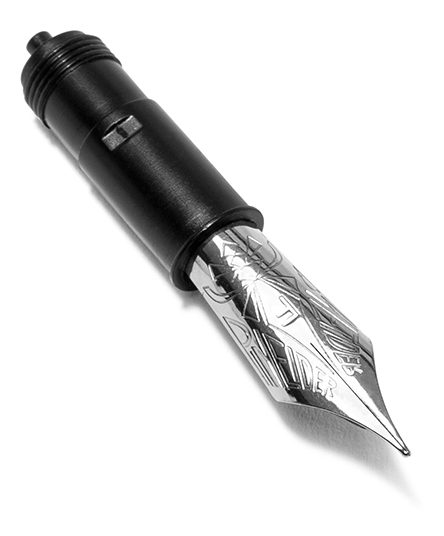
The collection of pen nibs is primarily divided into two categories.
Stainless steel nibs
The stainless steel nib provides:
- Reliability
- Precision
- Controlled rigidity
- Consistent performance
Available in EF, F, and M grades, they are designed for everyday writing where stability and dependability are essential.
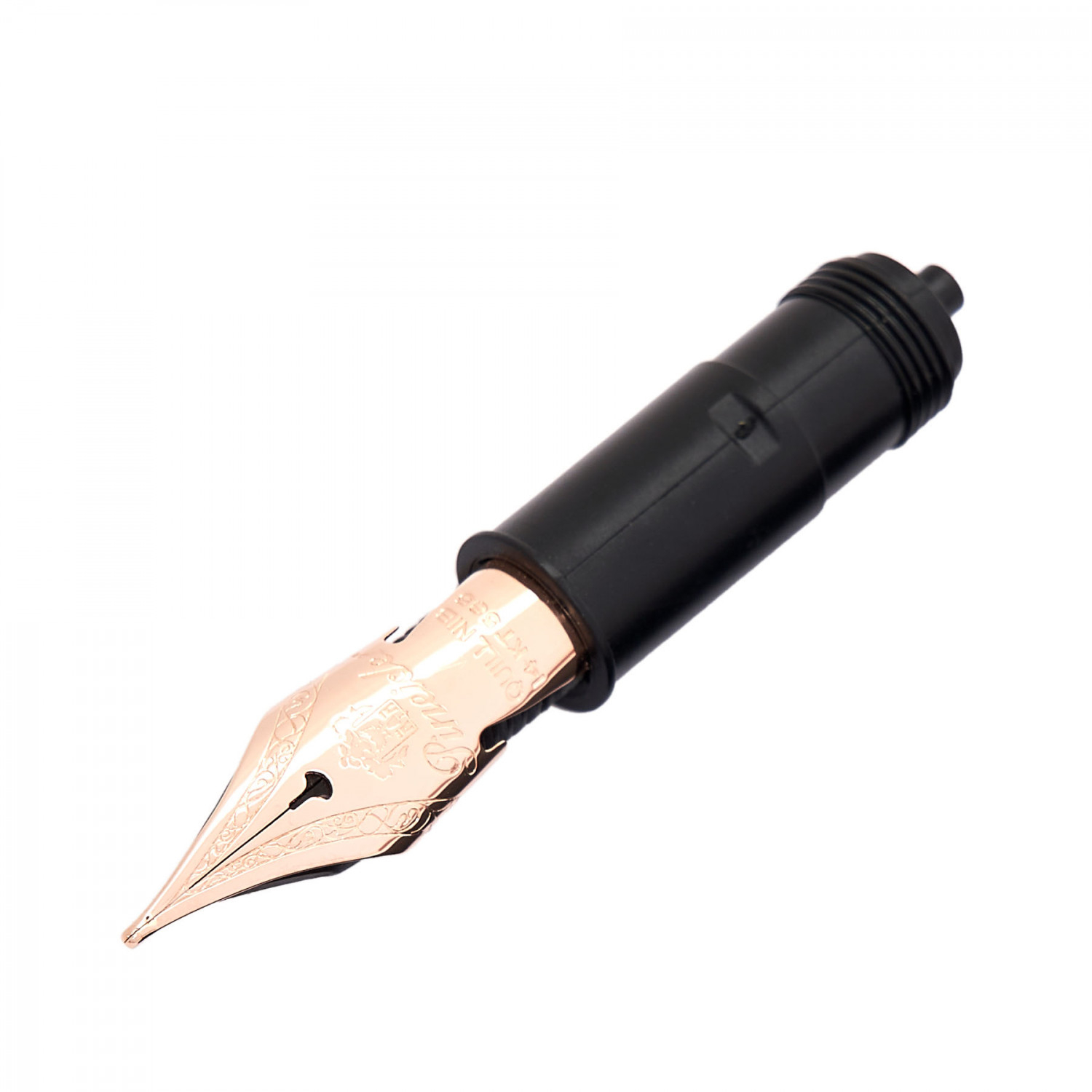
14 kt gold Quill Nib
With its 14 kt gold Quill Nib, Pineider expresses a more refined and sensory approach to writing.
Its defining characteristics include:
- Calibrated softness
- Subtle elasticity
- Generous ink flow
- A balance of lightness and control
The result is a fluid and expressive writing experience designed not around technical performance alone, but around the pleasure of the gesture itself.
Writing with a fountain pen as a daily ritual
Choosing a Medium nib is not simply a practical decision. It is the most accessible and balanced way to enter the world of fountain pen writing without obstacles, guided by smoothness, elegance, and comfort.
Because the true value of a fountain pen lies not only in the object itself, but in its ability to transform an everyday gesture into a moment of attention, balance, and style.
Book your Pineider calligraphy course in Florence and discover the art of handwriting through timeless Made in Italy craftsmanship.
