
The invention of writing: from birth to the present day
21 November 2023Writing, fascinating and intrinsic to the human essence, represents one of the most significant evolutionary steps taken by humankind throughout its history. Through the intricate web of graphic signs, human beings have been able to fix their ideas, thoughts and knowledge on material supports, thus enabling stable communication across time and space. In this article, we will explore the extraordinary journey of the invention of writing, from its inception to the present day. What is writing? Writing goes beyond the mere transmission of information. It is an art, an expression and a record of human culture. Like painting and music, writing captures the essence of our existence and shares it with the world. Through word choice, sophisticated sentence structure, the use of punctuation and incredible writing tools, we create literary works that inspire and leave an indelible mark on history. Writing, for example, preserves the memory and knowledge of past civilizations. From ancient manuscripts to precious books, we immerse ourselves in earlier cultures, discovering ideas, values and achievements. Each written word is a bridge to past generations and provides a unique opportunity for learning and growth. However, writing is not just a work of art or a way to preserve history. It is a powerful and universal tool of communication. Through letters, novels, poems and sacred texts, we convey deep emotions, share life stories, create imaginary worlds and make the voices of authors resonate in the hearts of readers. Birth and origins of writing The origins of writing are shrouded in an aura of mystery and admiration. Although it is impossible to pinpoint exactly when or where writing was invented, we can refer to several ancient civilizations that contributed to its development. Among them, the ancient Sumerian civilization in Mesopotamia stands out as one of the earliest known examples of a writing system. Around the fourth millennium B.C.E., the Sumerians developed a complex system of signs, called cuneiform, that were impressed on clay tablets. This revolutionary innovation enabled them to record information, organize accounts and even tell exciting stories. Evolution of writing over time The invention of writing marked the beginning of a path of relentless evolution. Over the centuries, different civilizations adopted and adapted writing systems and tools to suit their own linguistic and cultural needs. From the hieroglyphics of Ancient Egypt to the runes of the Nordic peoples, from the elegant calligraphy of Chinese characters to the sophisticated medieval scrolls of Western Europe, each form of writing encapsulated a piece of history and culture. However, one of the most significant turning points in the evolution of writing occurred with the invention of movable type printing by Johannes Gutenberg in the 15th century. This revolutionary innovation made the mass production of books possible, enabling the wider dissemination of ideas and literacy. Printing marked the beginning of a new era in which written knowledge became more accessible and shared. Writing today In the digital age in which we live, writing has undergone an unprecedented transformation. The spread of computers, smartphones and tablets has made digital writing the predominant form of communication. These new technological tools have simplified the process of creating and disseminating written content, opening up new expressive possibilities and expanding access to knowledge. However, at Pineider’s we are convinced that this evolution should not overshadow the value of traditional writing, as paper books, letters, cards, and hand-crafted calligraphy continue to hold a unique charm and sensory dimension. Conclusion The invention of writing represented a fundamental step in human history. From an original need for communication, it evolved to become a powerful tool for the transmission and preservation of knowledge. Through different civilizations and eras, writing has taken on multiple forms and styles, reflecting the immense diversity and richness of human cultures. Today, in the digital world, writing is reinventing itself anew, offering new ways of expressing and disseminating knowledge. Regardless of the form it takes, we at Pineider believe that writing remains a fundamental art, capable of connecting us with the past, illuminating the present and charting the path to the future. Discover all our luxury pens and become part of a wonderful art with a fascinating history. Aggiungi ai preferiti
The art of fountain pen writing
Fountain pen writing is an ancient form of expression that has its roots in the past. But what exactly is meant by “fountain pen writing”? This term conjures up images of elegance, precision, and refinement, but how is the fountain pen related to these qualities? Discover the secrets of this refined art form in this article and immerse yourself in a fascinating journey through the wonders of fountain pen writing. What is meant by “fountain pen writing”? “Fountain pen writing” is a term that evokes memories of timeless refinement, an art that transcends the mere transcription of words on paper. It represents an intriguing fusion of calligraphic technique and writing instrument, where the skill of the artist blends with the precision and elegance of the pen. Fountain pen writing is an artistic expression that requires mastery and attention to detail, allowing one to create distinctive and incisive strokes. Each stroke of the ink on the paper is a dance of conscious and harmonious gestures, where the pen is transformed into an instrument of personal expression. It is through fountain pen writing that words come to life, taking on a unique and fascinating form that reflects the character and style of the writer. Origins of fountain letters The origins of fountain pen letters go back to ancient times, when ancient scribes used rudimentary pens to trace symbols and hieroglyphics. Over the centuries, technology evolved, and fountain pens underwent a remarkable transformation. The earliest forms of fountain writing can be traced to ancient Egypt, where rudimentary pens, made from hollowed-out reeds or bird feathers, were used to write on clay tablets. These early forms of fountain pen calligraphy, though simple in their design, represented a fundamental step toward the refinement of writing instruments. Today, these precious works of art represent a perfect fusion of art and functionality, reflecting the beauty of writing and its cultural significance. How the fountain pen works The elegant operation of the fountain pen is a harmonious symphony of technique and grace. At the heart of this fascinating instrument is an ink reservoir, which can be filled in different ways, such as classic dipping, using cartridges or converters. By choosing one of these methods, you can refill your fountain pen with ease. In addition, this pen features a thin, sharp metal tip, known as a “fountain pen tip” or “nib,” which can be chosen in various shapes and sizes to suit your preferred writing style. With the right pressure on the tip, the flow of ink flows gracefully over the paper, allowing you to achieve smooth, controlled strokes. This unique mechanism gives an incomparable writing experience, inviting you to immerse yourself in a universe of creativity and precision through its majestic engineering and fine calligraphic features. Maintenance and use of fountain pens To master the art of fountain pen writing, it is essential to embrace its artistic beauty and adopt accurate writing technique. The pressure exerted on the tip while writing determines line thickness and ink flow, allowing you to experiment with a wide range of calligraphic styles. Fountain pen writing requires delicacy and care: by tilting the pen slightly, you can achieve striking and graceful nuances, while a more upright grip will ensure sharp, decisive strokes. Don’t forget to give it the proper maintenance to preserve its quality and durability. If you would like to learn how to best maintain and clean your fountain pen, check out our detailed guide for more information. A journey through the different types of fountain pens Fountain pens offer a wide range of styles and features, allowing you to customize them to suit your tastes and preferences. The nibs can be round or tapered, and some variants even include double nibs, allowing you to experiment with different calligraphic expressions. In addition, modern luxury fountain pens embrace classic and contemporary designs, crafted from fine materials such as silver, gold or high-quality resin, creating authentic jewels of beauty and functionality. Whether you are a passionate collector or an aspiring artist, Pineider fountain pens offer you a world of inexhaustible possibilities, a fascinating combination of the art of the past and the sophistication of the present. Conclusion In conclusion, the art of fountain pen writing represents an intriguing combination of form and utility. Its incredible history and the curiosities surrounding it make it a fascinating discourse for writing lovers. The fountain pen, with its majesty and ability to turn words into art, undoubtedly deserves to be celebrated as one of the finest symbols of our written culture. Aggiungi ai preferiti

How to clean a genuine leather handbag: the best methods
Genuine leather handbags are valuable and beautiful accessories, but they also require attention and dedication to maintain their luster and longevity over time. In this detailed guide, we will outline the best methods for cleaning a genuine calfskin handbag. Supplies needed to clean your leather handbags Before you start cleaning your leather bag, it is essential to be aware of what products to avoid. For example, it is important not to use harsh chemicals or detergents that could damage the leather. Instead, we recommend opting for a leather-specific cream, such as you would normally use for your hands or face, in order to keep it moisturized and protected, and having a soft cloth to gently buff the surface of the bag. We also remind you of some important tips to keep in mind: Store your bag in a well-ventilated, moisture-free place to prevent damage. Keep your bag away from water and never use water to clean it. Direct sunlight can make the leather brittle, damaging and discoloring it; therefore, when the bag is not in use, you should store it in the dust bag and in a dry place without sunlight. The various techniques for cleaning a leather bag Let us now turn to the cleaning techniques you can adopt to keep your leather bags in the best possible condition. Below, we will outline two methods you can consider: General cleaning with cream and cloth This is the basic procedure for cleaning a fine Pineider leather bag. Apply a small amount of leather-specific cream to the surface of the bag and spread it gently using a soft cloth. Be sure to cover the entire surface, making light circular motions. In this way, you will nourish the leather and remove surface dirt. Cleaning colored leather If you own a colored leather bag, it is important to proceed carefully to avoid fading or damage to the color during cleaning. In the case of dark leather bags, they are easy to treat: To remove stains, you can place the stained surface over a small pan containing boiling water, letting the steam act and then air-drying in the open air. Next, use a soft cloth previously dipped in a small amount of special leather cream to get the glowing appearance back. Before performing these steps, do a test on a small, inconspicuous area. This way, you will be able to check whether the color is altered or remains intact. In detail: how to clean white leather handbags White leather requires special care to avoid staining and fading. First, be sure to clean your white bag regularly to prevent dirt build-up. Use a soft, slightly damp cloth to gently remove surface dirt and be sure to dry the surface immediately after wiping it with the damp cloth. Avoid using excessive amounts of water, as this may damage the leather. Next, pour a drop of facial cleansing milk onto the cloth and gently massage the surface, following the veins of the skin. In addition, you can apply a specific cream for the skin to preserve its radiance and beauty. Alternative and natural methods Should you prefer more natural cleansing solutions, there are some options you can consider. For example, as far as light-colored leather bags are concerned, you can attempt to remove stains using egg white, provided it has been whipped to a snow-like consistency. Gently apply it to the stained area using a clean cloth and allow the open air to help it dry so that you get the best result. Conclusion Cleaning leather handbags, crafted with genuine leather, requires care and attention in order to preserve its integrity over time. Remember to use products suitable for leather, avoid excessive use of water, and always test on a small, inconspicuous area. By carefully following these tips, you can preserve the beauty and durability of your leather bag over time. Aggiungi ai preferiti

Our story, for you
10 November 2023On the occasion of the upcoming Black Friday, Pineider is opening its archives to the public for an exclusive private sale full of unique and iconic pieces. The founding of Pineider is an important chapter in the history of Tuscan tannery, one of the most sought-after and exclusive manufacturing traditions in the luxury world centered around the famous district of Santa Croce. To celebrate this precious DNA, the Florentine brand is preparing a surprise for all leather goods enthusiasts and more: coinciding with the upcoming Black Friday, unique items, rarities, and iconic collections that have placed Pineider at the forefront of high-end Made in Italy will be made available on our digital boutique. This exclusive event will take place in three distinct phases: From November 17 to 29 on pineider.com, it will be possible to register for Early Access, which will give preferential rights to participate in our Private Sales. From November 20 to 23, Black Friday will start and be accessible to all Pineider customers, with a 20% discount on pens and notebooks, and 20% off both small and large leather goods. From November 24 to 26, those with the Early Access coupon will be able to access the Private Sales and enjoy a discount of up to 70% on archive collections. Among the brand’s must-haves that will be available for purchase, there will be no shortage of small and medium leather goods collections featuring the Pineider monogram, some hard-to-find multicolor mini bags for women, travel bags, duffle bags, and a wide selection of men’s and women’s work bags. The best of our story, exclusively for you. Aggiungi ai preferiti

Writing Badly to Self Love
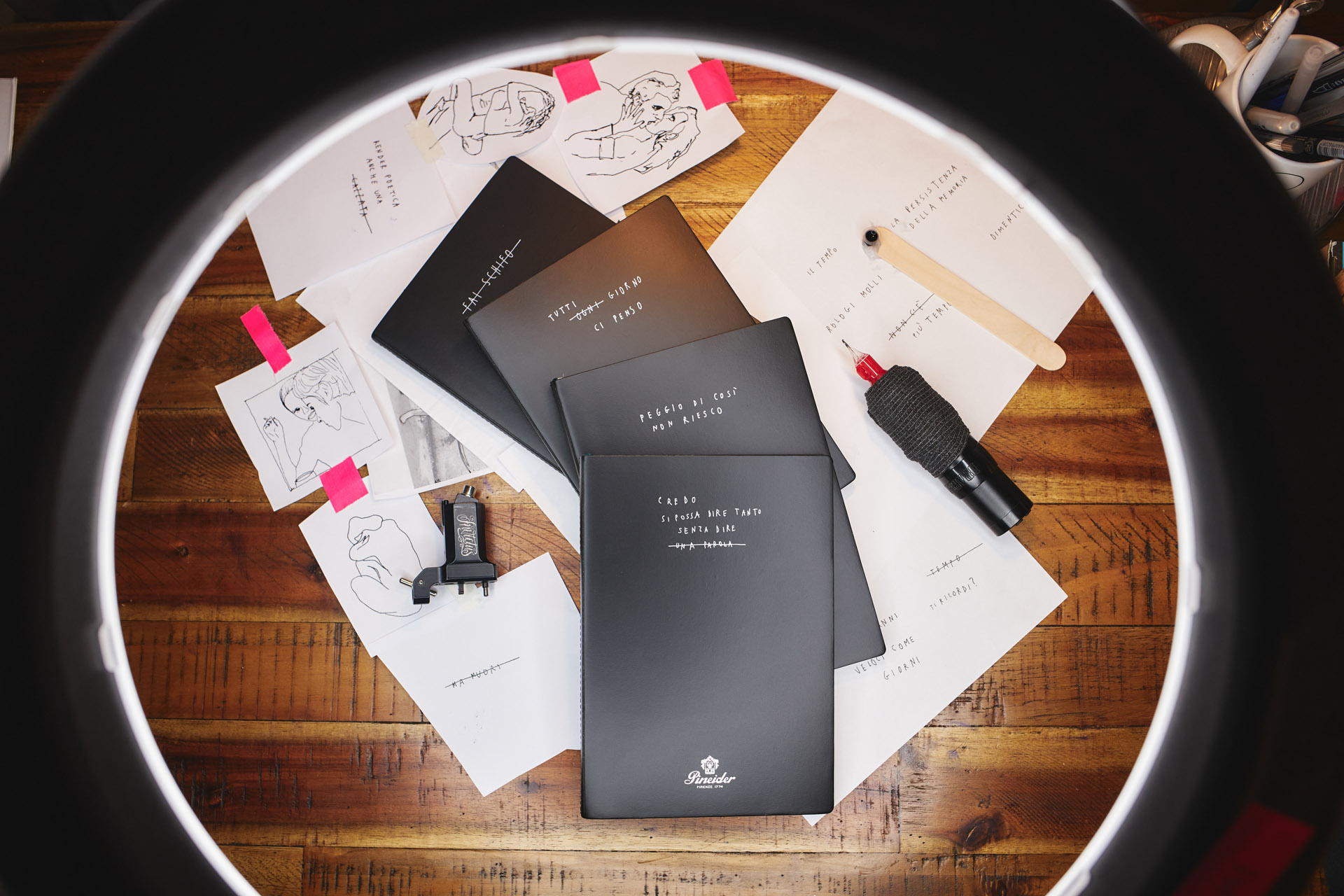
30 October 2023Pineider and Tatuaggimale launch a collaboration dedicated to primal writing, a tribute to the love of a gesture born with the sole purpose of changing the world. With words. The passion for handwriting in all its forms has led Pineider to encounter creatives of all kinds united by the search for a new raison d’être in the digital transformation era, for the oldest form of communication. From these encounters, calligraphy courses, writing workshops, new products, and unconventional shortcuts have emerged. The latest of these features Giovanni Barberis, a videomaker from Milan, who in 2016 gave life to a true artistic movement called Tatuaggimale. In the guise of a novice tattoo artist, almost playfully, Giovanni has legitimized a new expressive format that embraces typographic experimentation and writing on skin. His creations consist of short provocative phrases, quotes, slogans, or simple words expressed through primal styles, as if they were just sketched on a sheet of paper. But beyond the provocation of essentiality, in Tatuaggimale’s works, there is that of meaning, the unsaid, intimacy, and memories. Because each of his words conceals the aspirations, joys, pains, and personal story of those who, by getting it tattooed, have chosen it as a life companion. Drawing inspiration from four of Tatuaggimale’s most disruptive punchlines, Pineider wanted to create a limited edition of its black Jazz notebooks, totaling 100 copies, unveiled during a Halloween party in its Milan boutique. An unconventional project that celebrates the love for a rebellious gesture: sparking a spark in others by transforming thoughts into text. Aggiungi ai preferiti
Would a Pen By Any Other Name Smell As Sweet? (It Seems Unlikely)
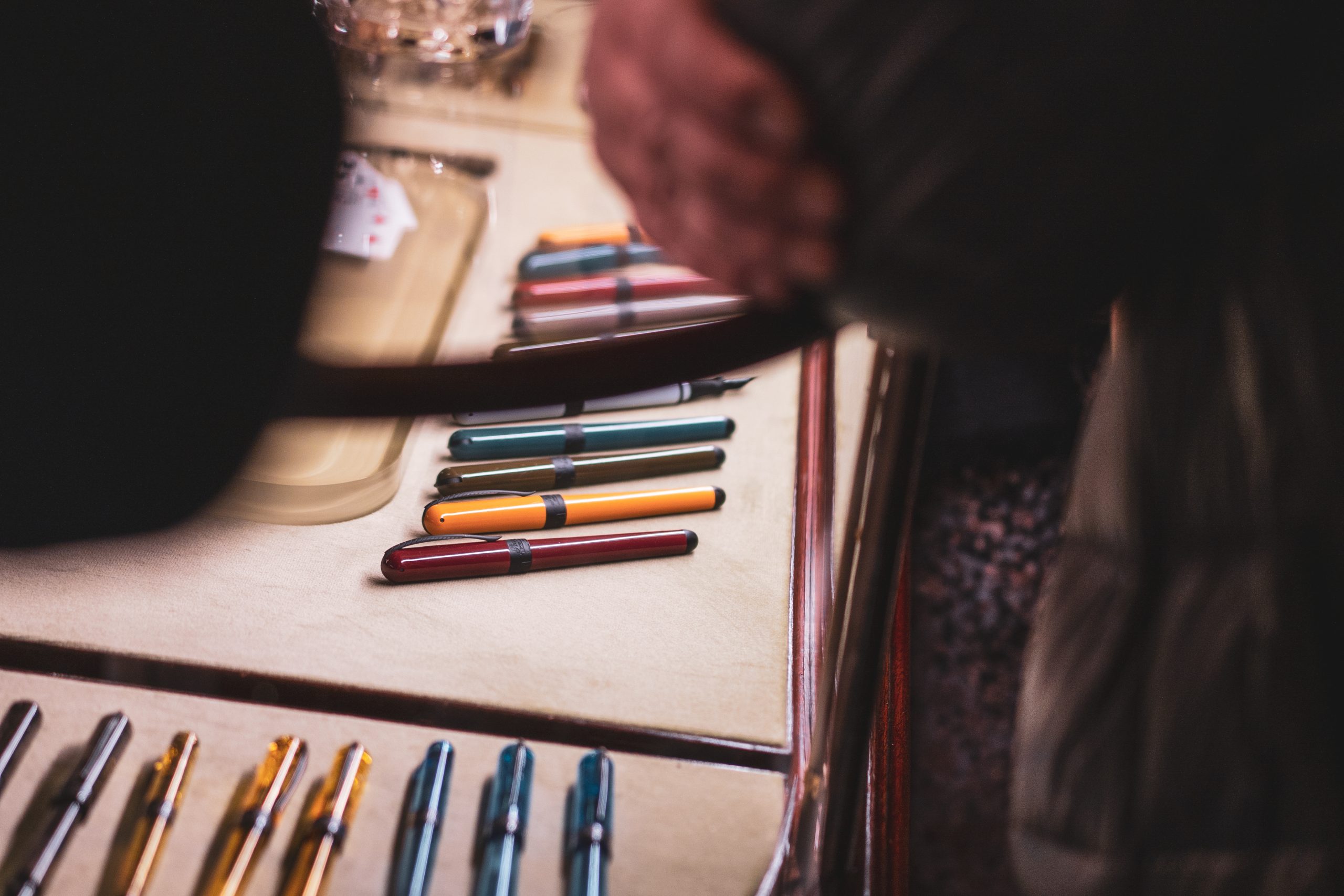
16 October 2023Pineider, the luxury leather-goods maker and purveyor of exquisite writing instruments, brings their distinctly Florentine artistry to the New World. By Daniele Delerme Flores On a recent visit to Pineider’s new atelier at Rockefeller Center in the heart of Manhattan – new, of course, being a relative term as the location has been open for more than a year but, then again, the company does trace its history all the way back to 1744 – the interesting juxtaposition of Old World Italian taste, refinement, and sensibility meeting American brashness becomes readily apparent from the moment one enters the charming and rather intimate space. At first glance, the dark mahogany paneling and warm, ambient lighting are nothing if not soothing – a welcome respite from the hustle and bustle of Sixth Avenue just a stone’s throw from the front door and the wall-sized advertisements for Seth Myers and The Tonight Show that are visible through the large glass panel windows at the back of the retail space that look out on an interior hallway of 30 Rockefeller. One would gladly remain indefinitely (but comfortably) ensconced amongst these finely crafted works of art, perusing and admiring. And what works of art there are. Pineider’s emphasis on lifestyle as a luxury purveyor of quality goods is evident upon merely a cursory inspection of the leather luggage set on display near the atelier’s entrance. Leather works range from travel desks and leather-bound notebooks to messenger bags, overnighters, duffles, holdalls, and totes. And then there are the writing instruments, a testament to the skill and imagination of Signor Dante Del Vecchio, the company’s resident “pen expert.” From the resin-based pieces to bright, eye-catching enamels, or the more subdued but still enticing skeleton models, the artistry, attention to detail, and pure love of the craft is apparent in each offering. Perhaps even more importantly for the customer, wielding one of Pineider’s instruments allows the writer to experience the simple act of writing on an altogether different level. Whether one is taking a step back in time to a bygone age with the fountain pen, staying the course with the ballpoint, or trying something off the beaten path with the roller-ball, the feel of a Pineider pen in one’s hand is truly an experience unlike any other. As a writer, my creative process usually begins with a pen and notepad. Over the years, I have found it easier to formulate my thoughts when putting pen to paper, as opposed to fingers to keyboard. Quite simply, I can’t write with a pen faster than my mind can formulate a sentence, so I find the pace of drafting in longhand to be a pleasant one. On the few occasions where I have tried my hand at typing an initial draft via word processor, subsequent drafts invariably require more revisions. To put it bluntly, I suspect this is because I can type faster than I can think (insert “shoulder shrug” emoji here). Recognizing these preferences (or limitations – beauty, after all, is in the eye of the beholder), my incomparable Editor-in-Chief at No Chaser, Karl Edwin Guerre (who, it should be noted, is also a brand ambassador for the company) suggested that I broaden my horizons and consider a luxury writing instrument from the skilled craftsmen at Pineider. With that in mind, I met Guerre on a bright and sunny afternoon at the Rockefeller Center location, where I was introduced to Liz Burghardt, a sales associate who proved to be quite knowledgeable. After explaining the unique peculiarities of my particular writing process, Liz suggested the rollerball model. As it turned out, her observations proved to be quite prescient. And so my journey as a Pineider-enthusiast began. Daniele Delerme Flores is Associate Editor and a contributor to No Chaser (print and online), a luxury lifestyle publication. He has written extensively about men’s style for publications such as The Rake -the Modern Voice of Classic Elegance, and websites like A Suitable Wardrobe. He is also the author of The Best Dressed Man In The Room – A Photographic History of the Sartorially Inclined Goniffs, Gamblers, and Gangsters of the Inter-War Years, 1920-1945, and, more recently, Pretty, A Novel from the East Harlem Cycle. His blog, An Uptown Dandy, remains a frequently cited source of information regarding menswear ephemera. He can also be found on Instagram at @an_uptown_dandy. Aggiungi ai preferiti
The Corporate Gift That Makes the Difference
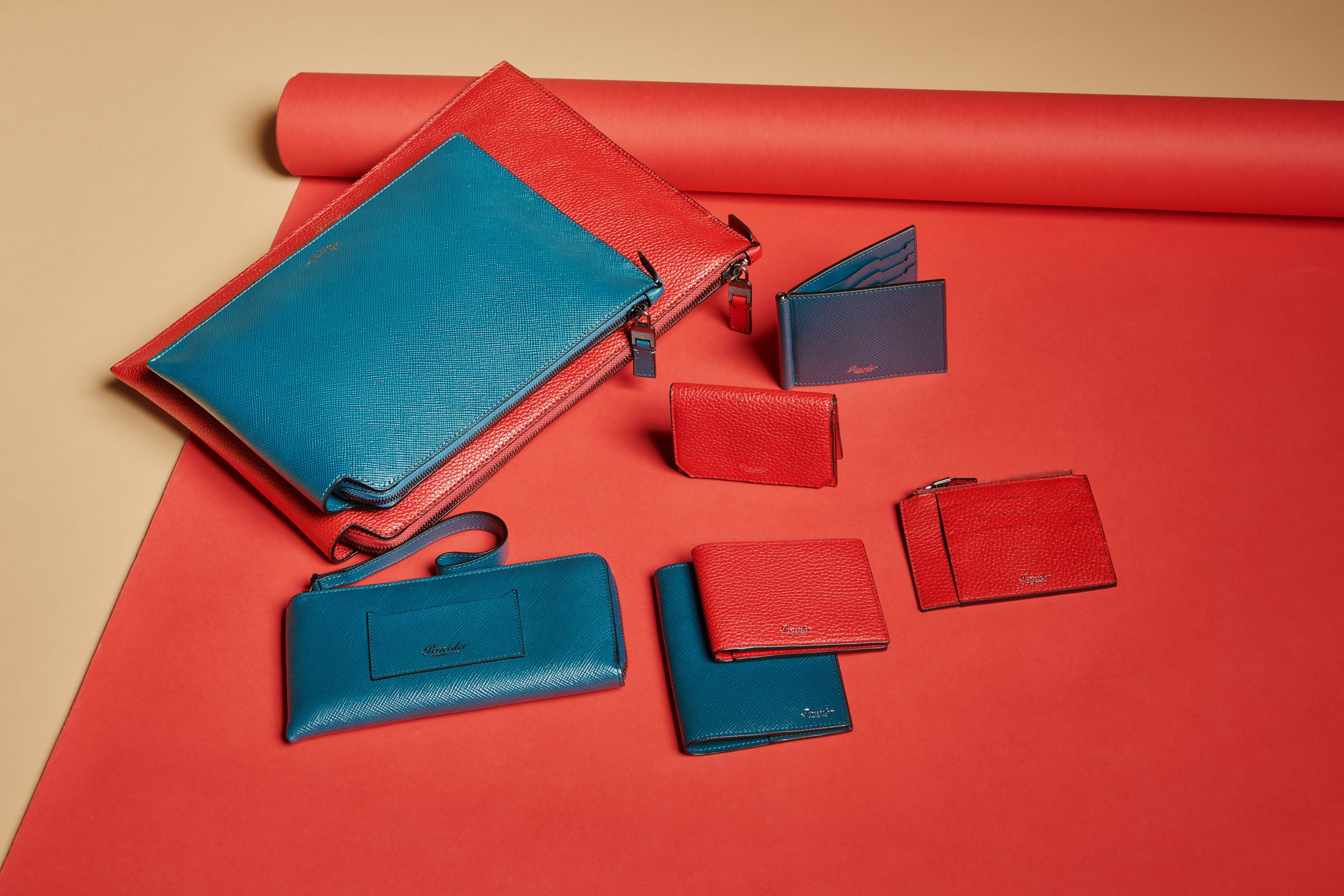
26 September 2023Offering a mere freebie isn’t enough to foster customer loyalty anymore. From large corporations to small professional firms, the quest for the perfect “cadeau” has become an opportunity to distinguish oneself and tell a story—with generosity. Here’s how Pineider caters to the most discerning businesses. How you surprise your clients reveals what kind of company you are. When it comes to defining the mystique of corporate gifting, it’s not just about “loyalty”; there’s much more at play: brand awareness, the reliability of services and goods offered, recognizability, positioning, and the assertion of a company’s untapped potential towards its customers. Furthermore, the proliferation of low-cost gadget offerings has flattened the originality of corporate gifts, rendering them, for many, a pointless cliché. The world of corporate gifting has now become a premier league, where what distinguishes itself is the prestige of the brand chosen as a partner, craftsmanship, and quality. In Pineider’s century-long history, creating products for businesses, regardless of their size, has held a significant place since its inception. It’s essential to know that a collection of corporate gifts demands the same expertise and level of craftsmanship as the seasonal collections showcased in our physical and digital storefronts. “In fact,” explains Gerardo Viviano, Pineider’s Production Director, “it can be said that the research and resources invested in these projects are even greater. Moreover, it’s not just about corporate gifting; it also includes office accessories, meeting room furnishings, and hotel furnishings, among many other products. It ranges from agendas to notebooks, from pens to small leather goods used as ‘luxury gadgets.’ They turn to Pineider because they seek a prestigious brand with a history and manufacturing tradition equally important to enhance their clientele.” In Pineider, a company receives the same treatment as a customer seeking something unique. “They come to us with their idea,” Gerardo continues, “and we assess the level of personalization together, from the company’s logo on a pen to the customer’s initials, or even a completely new product. This is the most captivating work for our team of artisans, such as the design of a writing desk or a passion box, which involves intricate geometries and materials ranging from wood to paper. Among the emerging businesses, the hotel industry stands out: we create furnishings for the desk and bedside table, pencils, pens, notepads, and hotel letterhead. We are sought after by major corporations, banks and insurance groups, as well as smaller professionals, from notary offices to accountants, for whom we personalize everything from letter paper to business cards.” Aggiungi ai preferiti
Back to School. The Art of Handwriting
14 September 2023Pineider’s beautiful handwriting courses are back in their boutiques. An opportunity to rediscover the forgotten pleasure of an ancient and subversive act: writing by hand. “In the digital age, paper and pen preserve the delicate beauty of everything that cannot be replicated. The slant of ‘l,’ the intricacies of ‘g,’ ink smudges, the spacing between words. These are the fingerprints of human personality.” With these words, excerpted from Pineider’s Manifesto, writer Enrico Dal Buono crystallized the essence of handwriting, a “realm of unique and irreproducible singularities” where “writing a simple note becomes a subversive gesture, a claim of uniqueness. By holding a pen, we expose ourselves to the risk of loss, we pledge to the certainty of never again. And this decision, which rebels against the mechanism of seriality, corresponds to authentic luxury.” A luxury that comes to life every year in the handwriting workshops organized by Pineider in its boutiques in Milan, Florence, and London. Starting from late September, the courses dedicated to those who want to re-learn writing or simply enjoy the pleasure of holding a pen will resume. Eloisa Libera, a handwriting teacher and partner in this initiative for the Milan boutique’s courses, prefers the term “beautiful handwriting” to “calligraphy.” Eloisa is the founder of Lettera E, a graphic studio dedicated to her greatest passion, in which she wagered her past as a product designer and embarked on an entirely uncharted future: “I worked in a small agency, where I was often in contact with the world of graphic design,” Eloisa explains. “I was very drawn to the world of fonts and curious about the origins of the design of each letter, so I discovered the world of calligraphy and fell in love with it, to the point of giving up everything and diving headfirst into it.” Eloisa’s journey was unconventional: “from fonts to lettering, to finally embracing calligraphy. Usually, it happens the other way around, but fortunately, it worked out for me. I immersed myself in something where it was difficult to see the future, and I turned my passion into my profession.” Discover our beautiful handwriting courses HERE. Aggiungi ai preferiti
The Art of Improvisation – Bookbinding as an Art Form
12 September 2023Bookbinding is a tradition that promotes the value of experimentation and reuse. Pineider is making this tradition accessible to everyone today. Workshops, pastimes, initiation rituals: a bookbinding course is much more than just a playful diversion. In the art of joining sheets of paper to create a book, there is a philosophy of life hidden within: “The goal is to transmit to people a DIY but experimental working method, even through the recovery of discarded materials and with everyday tools.” For Sebastiano, one of the instructors in the bookbinding courses organized by Pineider in its boutiques, bookbinding is the art of improvising with discipline. Sebastiano is one of the founders of Libri Finti Clandestini, a unique collective of enthusiasts: “We create experimental editorial products by exploring forgotten urban places. We search for materials in abandoned factories, archives, and printing workshops, and our goal is to create hand-bound books one by one, stamped and numbered, ready to be used and drawn upon: pop-up books in small print runs and collaborations with artists, where we delve into the fields of photography and letterpress printing.” The philosophy of the Libri Finti Clandestini project, Sebastiano continues, “is to bring something useful, well-crafted, and original to life by using ‘found’ paper that many consider trash: the materials used in the projects have the most diverse pedigree possible because they come from abandoned factories around Europe, libraries, warehouses, paper mills, and printing laboratories.” In Pineider’s Milan store, Sebastiano teaches Japanese bookbinding: “It’s an ancient technique that allows you to create an editorial artifact by working with single sheets of paper or sheets folded in half on themselves, using a needle and thread. Unlike other binding types where once the sewing is completed, you move on to trimming the book block, in the Japanese technique, trimming and arranging the pages in the correct format happen before sewing, which will be visible.” Aggiungi ai preferiti

Working never tires (in the office of dreams)
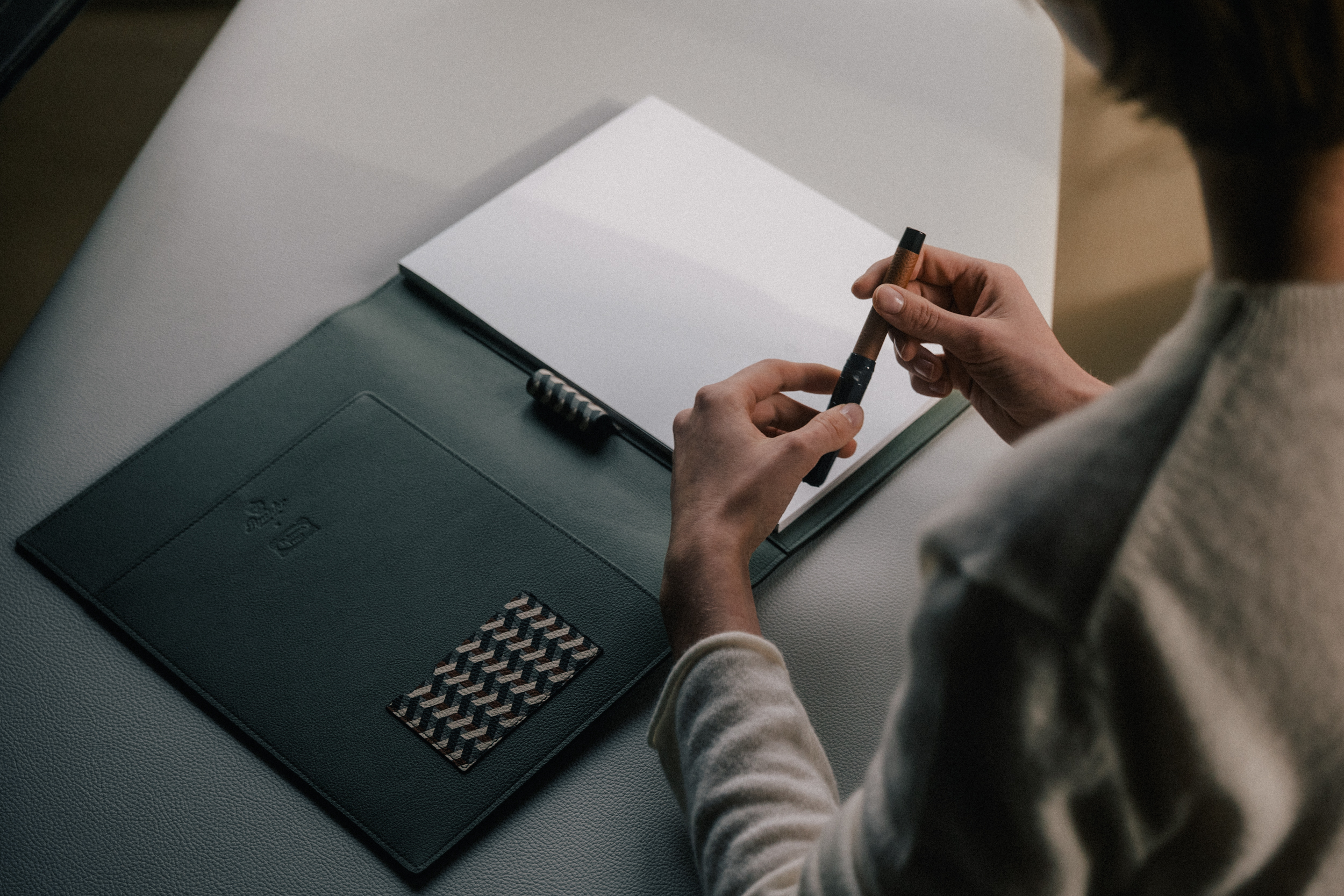
6 September 2023Attention to detail can transform the workplace into a “Realm of Ideas” where you can cultivate your creative potential. Just a few accessories, but the right ones, like those Pineider has created to make the office a unique place. In September, you won’t miss the beach umbrella: it may sound like one of those ironic challenges that trend on social networks, but it’s far from a Herculean task. It’s just enough to fuel the regained concentration after the summer break with your favorite nourishment for the mind and soul: ideas. “In the last three years,” explains Jonathan Paoli, Pineider’s retail manager, “with the rise of remote working, offices have become more of an ideal realm than a physical one, designed to give life and space to ideas. Now, more than ever, the workplace is where you must truly live your daily life, especially mentally. It’s a place you must truly feel as your own, a physical space where you can give birth to your best ideas because it speaks of you.” Pineider office products are designed for this very purpose because “while they are extremely functional, intended for professionals dealing with daily tasks, they also have an aesthetic element that sets them apart from typical accessories, the same hallmark of our more lifestyle-oriented collections. And, above all, they can be personalized.” Among the must-haves for the office envisioned by Pineider, the exquisite leather agenda is a must, allowing you to organize your days with style. There’s also the personalized document organizer, equipped with compartments for cards, notes, and pens, or the artistic notebook, inviting creativity by rediscovering the allure of a blank page, along with the indispensable desk pens. “We never forget,” adds Jonathan, “that work often begins on the journey from home. This is why our customers appreciate Pineider briefcases and backpacks, handmade using fine Tuscan leather. They are both functional and beautiful to showcase. It is in this combination that Pineider’s secret lies.” Aggiungi ai preferiti
