The history of sealing wax is deeply connected to the history of communication, craftsmanship, and personal identity. There is an ancient and silent gesture that has crossed centuries without losing its fascination: sealing a letter with wax.
More than a simple material, sealing wax represents authenticity, elegance, and intention. A ritual made of warmth, patience, and precision, capable of transforming a message into something personal and memorable.
Even today, sealing wax continues to evoke the beauty of slow gestures and timeless refinement.
What is sealing wax: natural origins and composition
Sealing wax is a thermoplastic resinous compound primarily made from:
- Natural resins
- Shellac
- Pigments
- Waxes
- Mineral substances
Its most distinctive characteristic lies in its transformation through heat. When warmed, sealing wax becomes soft and malleable, ready to receive an imprint. As it cools, it hardens into a glossy and durable surface.
The origins of sealing wax are rooted in nature itself. The primary raw material comes from the secretion of the Kerria lacca insect, collected from tree branches in tropical regions of Asia.
Even today, its production preserves the charm of traditional craftsmanship through processes such as:
- Purification
- Melting
- Pigment blending
- Manual preparation
Each stage contributes to creating a perfect balance between aesthetics, functionality, and artisanal quality.
Sealing wax in the Middle Ages and official communication
Introduced to Europe during the Middle Ages, sealing wax quickly became an essential tool for protecting and authenticating documents.
From the 16th century onward, its use alongside paper transformed official communication across courts, institutions, and trade routes.
Monarchs, nobles, merchants, and diplomats entrusted their identity to wax seals through:
- Coats of arms
- Monograms
- Personal emblems
- Official seals
In a world without modern security systems, an intact seal represented authenticity and inviolability, while a broken seal communicated immediate evidence of tampering.
The seal became both a functional and symbolic mark of authority.
The symbolic meaning of colors in sealing wax
Throughout the history of sealing wax, colors also carried important symbolic meanings.
Different shades communicated different messages:
- Deep red for official and ceremonial documents
- Black for mourning or confidential correspondence
- Blue for discretion and authority
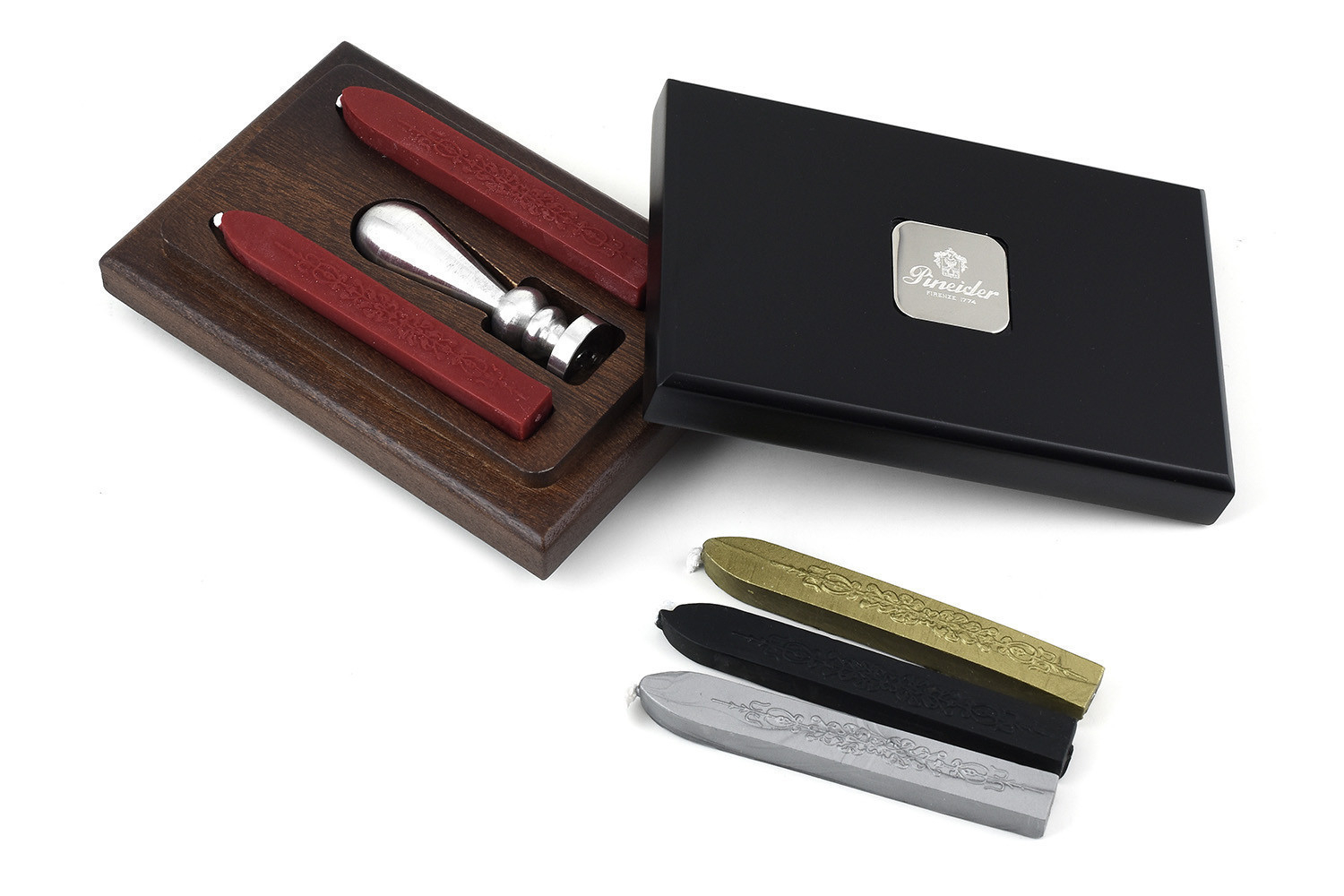
- Gold and precious tones for prestige and luxury
Pigments were not used solely for decoration. They also influenced the texture, shine, and consistency of each wax formulation.
Some luxurious preparations were even enriched with rare fragrances such as:
- Ambergris
- Musk
- Natural essences
The wax seal became a complete sensory experience that combined sight, touch, and scent.
Uses of sealing wax through history
Over centuries, sealing wax has been used in many different artistic, ceremonial, and decorative contexts.
Main uses of sealing wax
- Sealing letters and official documents
- Decorative applications on furniture and luxury objects
- Protective finishes for wood and metal
- Sealing high end wine bottles
- Luxury packaging and invitations
Even today, sealing wax remains present in institutional and ceremonial settings where authenticity, elegance, and tradition continue to hold value.
Sealing wax and contemporary stationery culture
In the age of digital communication, sealing wax continues to symbolize intentionality and personal expression.
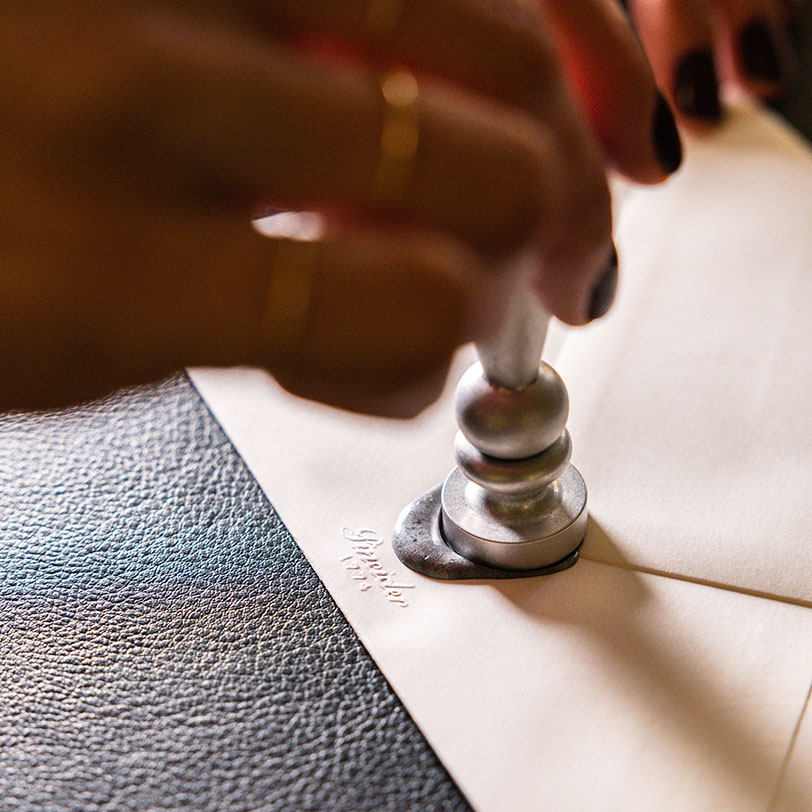
Using a wax seal transforms communication into something tangible and memorable.
For this reason, sealing wax has regained popularity in:
- Luxury stationery
- Calligraphy
- Wedding invitations
- Handcrafted correspondence
- Premium packaging
Every seal communicates individuality, care, and timeless elegance.
How to preserve sealing wax
Like every refined natural material, sealing wax requires proper care to preserve its beauty and integrity over time.
It is recommended to:
- Avoid prolonged exposure to heat and sunlight
- Store sealing wax in dry environments
- Avoid applying excessively thin layers
- Protect seals from impact and pressure
Its natural variations are part of its artisanal charm and authenticity.
Sealing wax as a timeless expression of elegance
The enduring power of sealing wax lies in its ability to move through centuries without losing meaning.
In a fast-paced and digital world, the gesture of sealing still represents something rare: the value of attention, intention, and presence.
Because sealing does not simply mean closing something. It means giving importance to it. And it is precisely within this quiet gesture that sealing wax continues to express its timeless elegance.
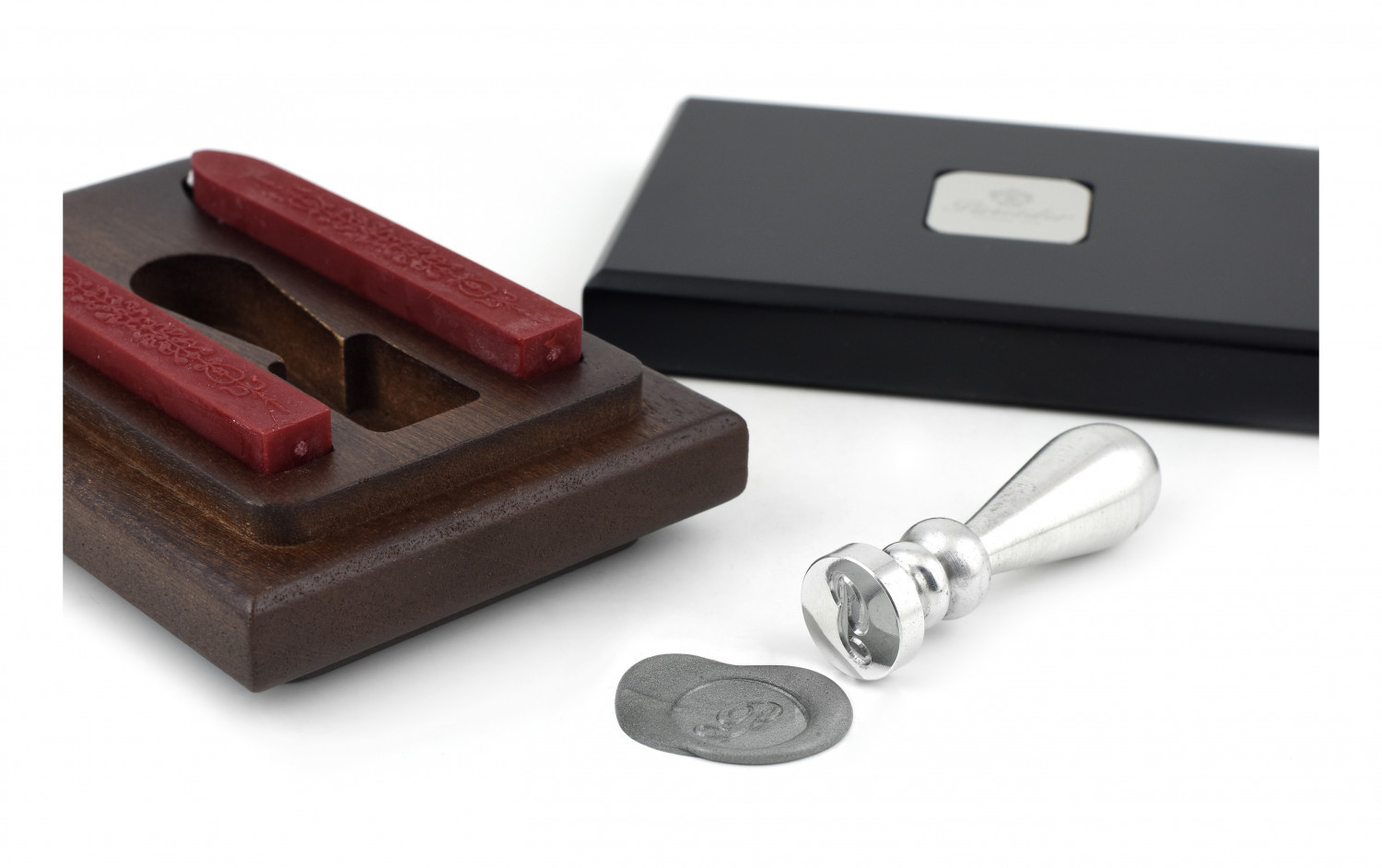
Discover the personalised Pineider wax seal set and transform every letter, invitation, or message into an authentic expression of craftsmanship and refined Italian style.