Pineider and Rolls-Royce Together for the Launch of “Alba”
29 May 2026To celebrate the launch of Alba, Pineider hosted a special event on May 27th at its Florence boutique, transforming the debut of the new collection into an immersive experience dedicated to elegance, movement, and the pleasure of slow living. For the occasion, Pineider partnered with Rolls-Royce Italia, offering guests the opportunity to experience the city aboard an extraordinary fully electric Rolls-Royce. It was a unique way to travel through Florence’s historic center and rediscover its beauty through a vision of luxury that is quiet, contemporary, and deeply experiential. The event was conceived as a natural dialogue between two worlds united by the same commitment to craftsmanship, attention to detail, and a culture of excellence. On one side, writing, leather, and objects designed to stand the test of time; on the other, the world’s most iconic automotive design, reinterpreted through a modern electric vision. Pineider’s Florence boutique became a meeting place between heritage and innovation, welcoming guests, clients, and friends of the brand in an intimate and sophisticated atmosphere. More than a product launch, the event was designed to tell the story of Alba through a complete experience shaped by emotion, movement, and timeless style. Aggiungi ai preferiti

Polina Stepanova: When Matter Becomes Memory
28 May 2026In the third episode of Pineider People — the project through which Pineider tells the stories of individuals united by a shared sensitivity toward time, authentic beauty, and the value of things made to endure — Polina Stepanova, visual artist, lecturer, and aesthetic researcher who has made the transformation of matter the core of her creative investigation, reflects on her relationship with time, materiality, and the rituals shaped by Pineider products. Born into a universe of art, fashion, and experimentation, Polina developed an instinctive connection to drawing and visual storytelling from an early age. After studying at the Royal Academy of Fine Arts in Antwerp, her path intertwined with the worlds of fashion, teaching, and contemporary artistic research, while always preserving an almost ancestral approach to creation. Her works seem to emerge from a fragile yet powerful balance between control and unpredictability: inks, pigments, and water move across the surface following unforeseeable trajectories, allowing gravity, gesture, and time itself to become part of the creative process. For Polina, painting is not merely about representation, but about allowing energies, memories, and invisible layers to surface. It is a vision that naturally resonates with the Pineider universe. Because even the most everyday objects — a leather briefcase, a pen, a notebook preserved over time — can become vessels of stories. Pineider leather goods are born from precisely this idea: creating objects that do not simply serve a function, but become companions through life, living surfaces that absorb the passing of years, hands, and experiences. Leather, like paper, retains traces. It transforms. It acquires character. It becomes personal. In Polina Stepanova’s work, matter itself seems to possess a memory. Every mark tells of a passage, every imperfection becomes part of the final piece. In the same way, a Pineider bag or accessory does not aspire to static perfection, but to an authentic beauty capable of evolving alongside the person who chooses it. It is not ostentatious luxury, but lived luxury. A luxury made of daily rituals, attention to detail, and objects destined to endure beyond seasons and beyond time itself. Polina’s artistic research often explores the relationship between the visible and the invisible, between matter and spirituality, between human gesture and natural force. Her creations evoke inner landscapes, primal memories, and symbols that belong as much to the personal sphere as to the collective one. And perhaps it is precisely this ability to slow down the gaze and restore depth to things that represents her most authentic point of connection with Pineider. Because “Crafting Eternity” does not simply mean creating exceptional objects. It means giving shape to something capable of moving through time without losing meaning. With Pineider People, we continue to share the stories of individuals who embrace this same vision: women and men who choose slowness, care, memory, and authenticity as a contemporary form of luxury. And who, through their work and perspective, remind us that the most precious things are not those that pass quickly, but those that remain. Aggiungi ai preferiti

“Pineider People”: Michelle Carpente and the Art of Turning an Invitation into an Eternal Memory
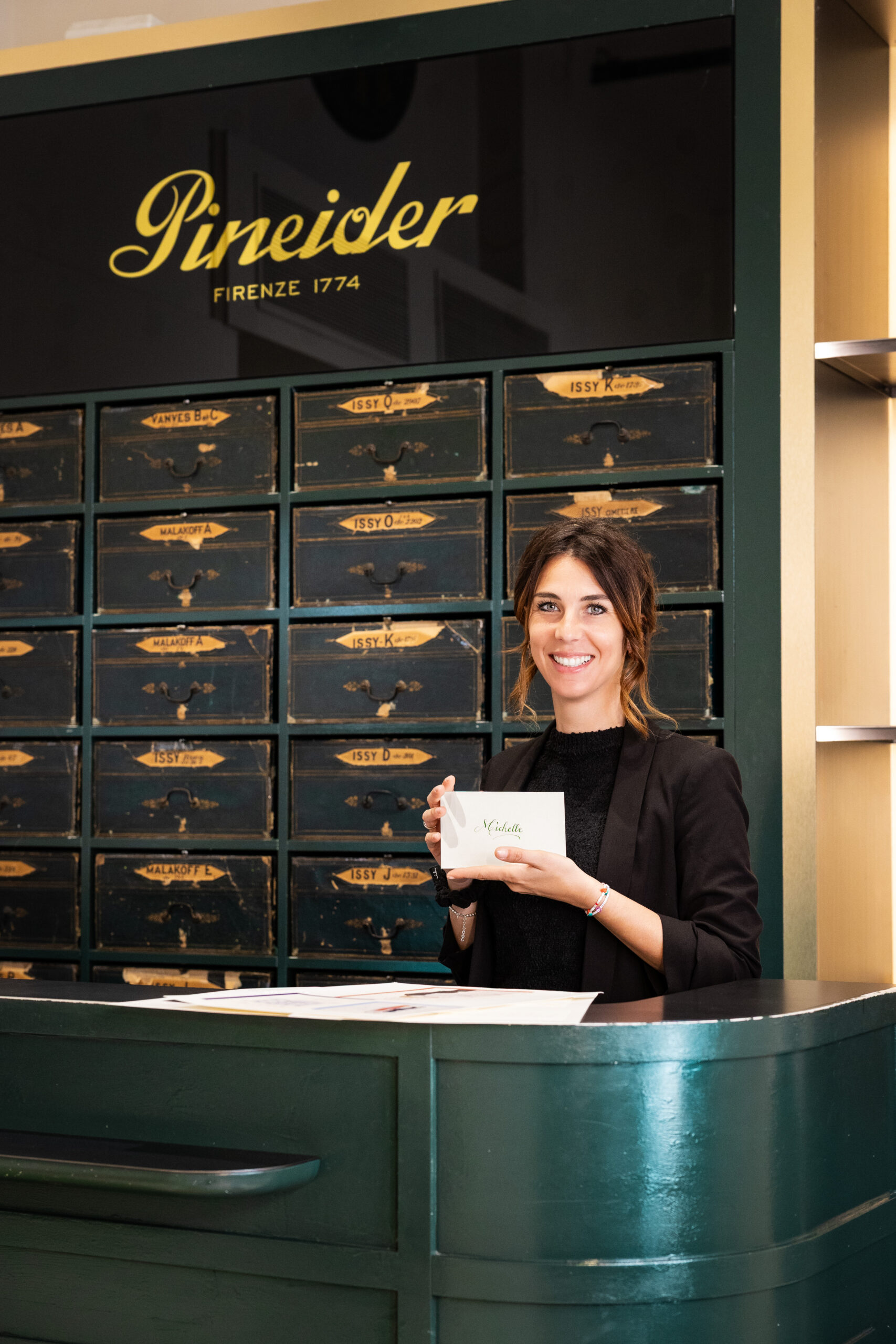
27 May 2026For over two centuries, Pineider has created objects designed not merely to be used, but to move through time alongside the people who choose them. It is from this same sensibility that Pineider People was born — the editorial project that tells the human and cultural stories surrounding the brand. A journey shaped by encounters, testimonies, and personalities united by a shared vision: a love for writing, artisanal craftsmanship, attention to detail, and an authentic idea of luxury — far from excess and instead deeply connected to the beauty of things created to endure. Following the first chapter, the journey of Pineider People continues with Michelle Carpente, a wedding planner who has made personalization and emotion the very essence of her work. For Michelle, entering the world of Pineider means experiencing something unique, comparable to choosing the perfect dress: a moment where aesthetics, sensitivity, and identity come together to create something truly one of a kind. In the world of weddings, every detail tells a story. And it is precisely through paper that this story first takes shape. An invitation is not merely an announcement, but the first gesture of welcome — the very first glimpse into the atmosphere that will define the special day. This is why every graphic suite is conceived to be authentic and entirely bespoke: from fonts to finishes, from the choice of paper to engraving techniques, all the way to the most refined details such as embossing and hot foil stamping. The collaboration between Michelle Carpente and Pineider is rooted in a shared vision of luxury: not ostentation, but the pursuit of quality, the value of time devoted to craftsmanship, and the ability to create emotions destined to last. Whether it is an elegant, contemporary, or unconventional wedding, there is always a special way to transform every invitation into a keepsake to treasure. It is here that Pineider’s signature philosophy, “Crafting Eternity,” finds its most authentic expression. Not only in the artisanal tradition that has defined the brand for more than two centuries, but in its ability to create objects that accompany life’s most unforgettable moments and render them timeless. With Pineider People, Pineider continues to give voice to individuals and stories that share the same appreciation for time, beauty, and the enduring value of things made to remain. Aggiungi ai preferiti
Beauty Is Passed Down: Pineider and Agee Celebrate the Art of Generational Sharing
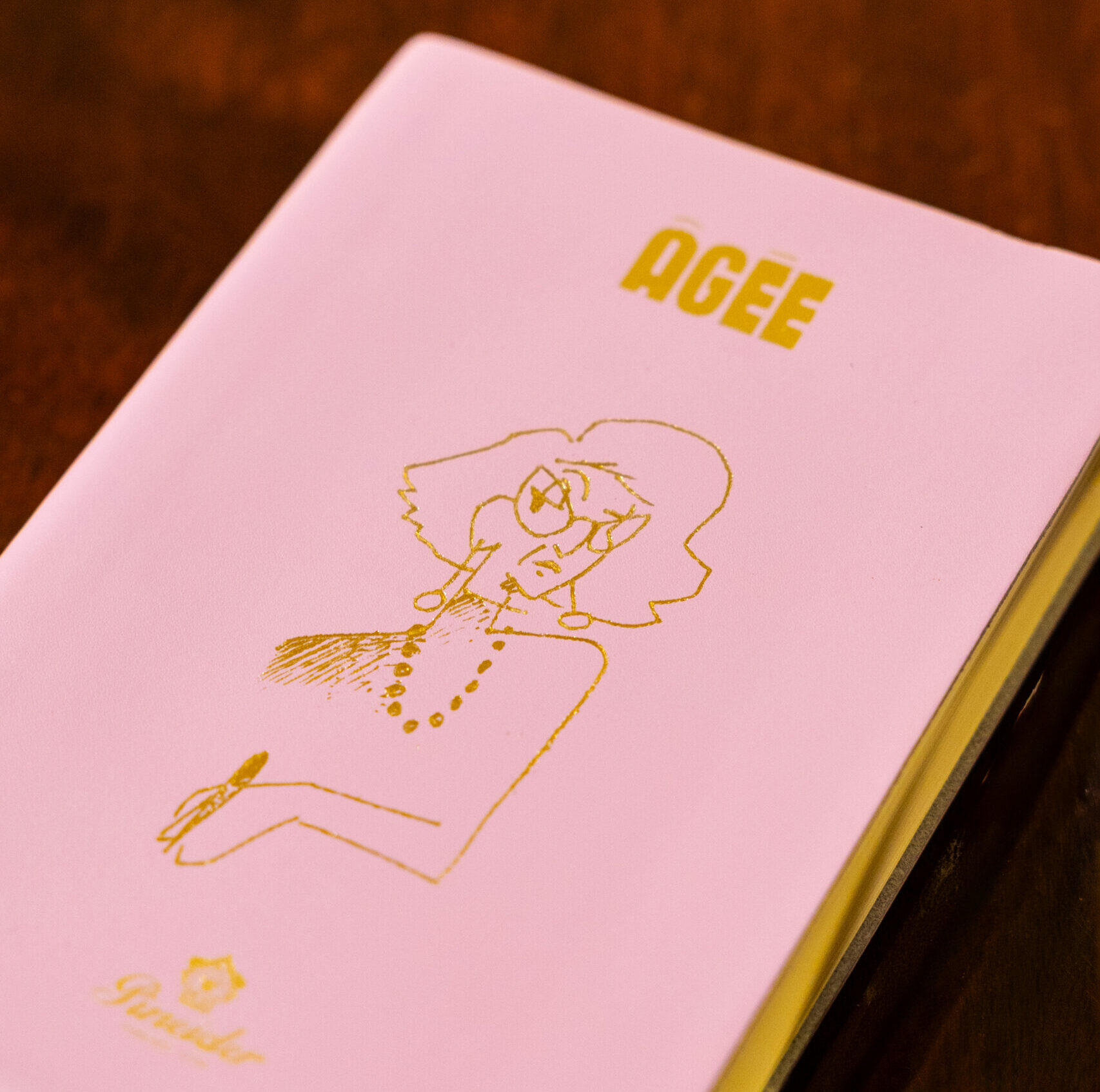
19 May 2026There are gestures that travel through time without ever losing their value. Writing by hand is one of them. A slow, personal movement capable of preserving memory, identity, and emotion. It is from this reflection that “Beauty Is Passed Down” was born — the event that brought together Pineider and Agee in a dialogue dedicated to the transmission of artisanal knowledge, beauty, and stories worthy of continuing to live on. Inside the Pineider boutique on Via Manzoni in Milan, guests and enthusiasts took part in a calligraphy workshop conceived as an immersive experience into the value of the written gesture. An intimate yet contemporary moment in which calligraphy became a symbol of continuity between past and present, tradition and reinterpretation. Alongside Pineider, Agee was one of the evening’s protagonists — a brand that has made restoration and transformation the very core of its creative vision. Its jewelry pieces reinterpret vintage treasures and heirlooms from the past, giving them a new identity through a reconditioning process that combines aesthetic sensitivity with artisanal care. Each creation is therefore born from an existing memory: an object that has crossed eras, hands, and stories, now rediscovering a new life. A philosophy that naturally aligns with the world of Pineider. For generations, the Florentine Maison has preserved the value of time through paper, leather goods, writing, and the excellence of Italian craftsmanship, creating objects destined to endure and be passed down. In an age dominated by speed and ephemerality, the act of writing by hand still retains something profoundly authentic: the ability to leave a personal, irreplaceable mark. The workshop thus became a meeting point between two universes united by the same sensitivity — one devoted to objects that preserve memory and continue telling stories across time. The evening concluded with a cocktail party that brought together guests, creatives, and friends of both brands in an atmosphere of exchange and shared inspiration, celebrating the value of what is not simply created, but carefully preserved, reinterpreted, and passed on. Discover the photo gallery Aggiungi ai preferiti
Pineider People: Stories That Travel Through Time
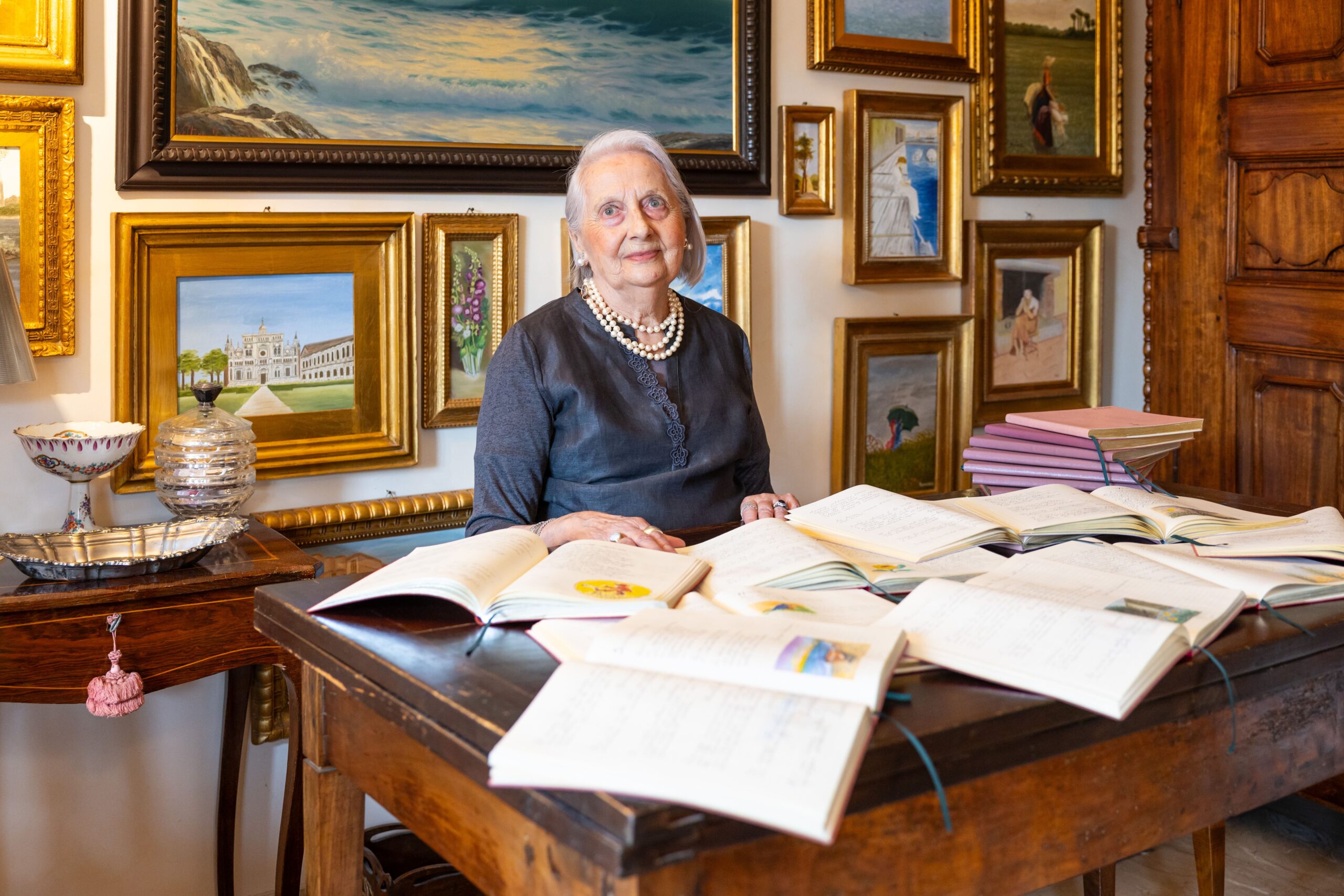
11 May 2026There are objects that accompany our lives, others that preserve them, and still others that tell their story and pass it on — page after page, hand after hand: a notebook worn at the corners, a pen that carries years of thoughts, a sheet of paper holding memories destined to remain. Pineider has always existed within that intimate space where writing meets time, and it is precisely there that authentic stories are born — everyday gestures destined to become memory. It is within this space of memory and imagination that Pineider People comes to life: a new storytelling project dedicated to our community of clients and enthusiasts. A collective narrative made of people, experiences, and testimonies that share a common way of looking at the world — slow, conscious, and profoundly human. Through their words, Pineider People explores lives united by a love for writing, a respect for craftsmanship, the value attributed to time, and a vision of luxury far removed from excess and instead rooted in the authenticity of things made to last. It is a project that naturally embodies Pineider’s payoff, Crafting Eternity — not only as an expression of the artisanal excellence that has defined the brand for over two centuries, but also as an attitude toward creating objects capable of accompanying moments destined to become eternal. The first chapter of Pineider People, released on Sunday, May 10th for Mother’s Day, is dedicated to Maria Maddalena Ramaiola in Berri, who opened the doors to her personal universe through her sixteen “golden notebooks”: pages preserved over time, where memories, reflections, and fragments of life become precious testimony to a life lived with care and sensitivity. In her story, we rediscover the truest value of writing: the ability to transform memory into something tangible, something to preserve and pass on. A simple gesture, yet an extraordinary one, that continues to give meaning to words even in an age defined by speed and ephemerality. With Pineider People, the brand opens a space devoted to real stories. Stories of people who still choose to write by hand, to preserve time, to leave a trace. Because every page written with care is, ultimately, a small exercise in eternity. To discover the first Pineider People story by Matilde Berri, click here. Aggiungi ai preferiti
Jet Set Pass: traveling in style, without looking like a lost tourist
4 May 2026Traveling today is incredibly easy. Doing it well, a little less so. It only takes a short trip to realize that travel is one of those moments when good manners matter most: shared spaces, uncertain timing, unfamiliar people, and a fair amount of stress all require a strong sense of self-control. And once you arrive, things don’t necessarily get easier. The rules change, habits shift, and rarely does anyone take the time to explain them… This is precisely where the difference lies between those who truly travel and those who simply move from one place to another. It is from this awareness that Jet Set Pass was created — a contemporary etiquette workshop organized by Pineider in collaboration with the Italian Etiquette Society and led by Elisa Motterle. The session focuses on the codes of modern travel, helping participants understand and navigate them with confidence and ease. Because traveling often is not enough… Many people travel regularly, yet don’t always feel completely at ease. Overpacked yet impractical suitcases, uncertainty about how to behave in a hotel, small missteps in interactions with staff or fellow guests — details that, taken together, can turn even the most anticipated trip into a less-than-ideal experience. There is also a more subtle but decisive aspect: the gap between how we would like to appear and how we actually present ourselves. What you will truly learn During the Jet Set Pass workshop, we focus on very practical elements: how to plan a trip intelligently the codes of hospitality and how to interact with staff what changes from one destination to another (and why) the most common faux pas — and how to avoid them how to pack an essential and functional suitcase what truly distinguishes a seasoned traveler The result is simple: fewer uncertainties, less stress, greater control. The Jet Set Pass workshop will take place on May 16th, from 10 AM to 12 PM, at the Pineider boutique. An opportunity to learn how to travel with greater awareness, ease, and — why not — that quiet confidence that is immediately noticeable, even without saying a word. Aggiungi ai preferiti

The Responsibility of Words: Writing to Think, Thinking to Understand
27 April 2026On the occasion of World Book Day, LUISS Guido Carli University promoted an initiative that went beyond symbolic celebration, becoming a moment of concrete reflection on the role of writing in contemporary society. The workshop “The Responsibility of Words,” organized together with Premio Campiello and Pineider, placed at its center a crucial question: today, writing is not merely a functional act, but an exercise in civic awareness. Because in an age where content production is constant and accelerated, the real risk is not a lack of words, but their loss of meaning. We write continuously—messages, emails, notes, prompts—but increasingly without truly engaging with the thought that generates them. It is precisely within this fracture that the contribution of Nicola Andreatta, CEO of Pineider, took shape. During his masterclass, he offered a clear and deeply contemporary reflection on the value of writing. “Let me ask you a very simple question,” he began. “When was the last time you wrote something by hand—not out of obligation, but to think?” A question that only appears simple, yet introduces a central theme: writing as a tool for understanding, not mere recording. Andreatta shared a personal experience from his university years: his conscious decision not to rely on transcriptions. “When I wrote notes by hand, I understood more—and above all, I remembered more. I wasn’t copying what the professor said; I was filtering, choosing, constructing. Writing wasn’t recording information; it was transforming it into something of my own.” This intuition, now supported by numerous scientific studies, highlights a truth that is often overlooked: access to information does not equal understanding. Speed—the dominant value of our time—does not guarantee depth. “We have built perfect tools to access information, but less effective ones to transform it into knowledge,” he noted. At this point, the focus shifts to the act of handwriting, understood not as nostalgia, but as a cognitive practice. “Writing by hand is a physical gesture. It has rhythm, resistance, time. And it is precisely within this constraint that something important happens: thought takes shape.” The slowness imposed by pen and paper is not an obstacle, but a necessary condition for activating deeper mental processes, capable of integrating memory, perception, and reflection. But there is a further step—perhaps the most relevant for our time: today, writing by hand is a choice. “A choice to slow down when everything accelerates. A choice to be present when everything distracts. A choice to think when everything produces.” Within this framework, the reflection inevitably expands to our relationship with emerging technologies, particularly artificial intelligence. Andreatta does not take an oppositional stance, but instead invites a clear distinction: “We need to distinguish between two things: writing to produce and writing to think. For producing, AI is perfect. For thinking, it is not.” The issue, then, is not technology itself, but the risk of passive use. “If we delegate the writing process, we are not just delegating the gesture—we are delegating thought. We move from being authors to becoming editors of thought.” A subtle yet radical transformation, with implications not only at the individual level, but also collectively. “A society that does not think deeply is a more fragile, more influenceable, more superficial society.” It is here that the theme of responsibility in language takes on its full civic meaning. Writing means taking a stance, constructing meaning, exercising doubt. “Critical thinking does not arise from speed. It arises from the ability to pause, to question, to reformulate. If we remove time, we remove doubt. And without doubt, there is no critical thinking.” Within this reflection, Pineider’s role becomes clear—not simply as a producer of tools, but as a custodian of a culture of writing. “We do not sell objects. We preserve a way of thinking. A pen or a sheet of paper is not meant to help you write more—it is meant to help you write better.” In a world saturated with notifications and distractions, paper thus becomes a space of autonomy—a space where thought can return to being personal, not delegated, not automated. A simple gesture, yet profoundly countercultural. The masterclass concluded with a concrete, almost daily invitation: “Every day, take a sheet of paper and write by hand. Not to share. Not to publish. But to understand.” Perhaps this is where the most relevant meaning of World Book Day lies today: not in celebrating the object, but in rediscovering the process. Because, as Andreatta reminded the audience, “in a world where everything can write for us, the real difference will not be who writes more—but who continues to truly think.” And in this perspective, the true contemporary luxury takes on a new definition: not free time, but time to think. Aggiungi ai preferiti
Pineider at LUISS: When a Stamp Becomes a Story
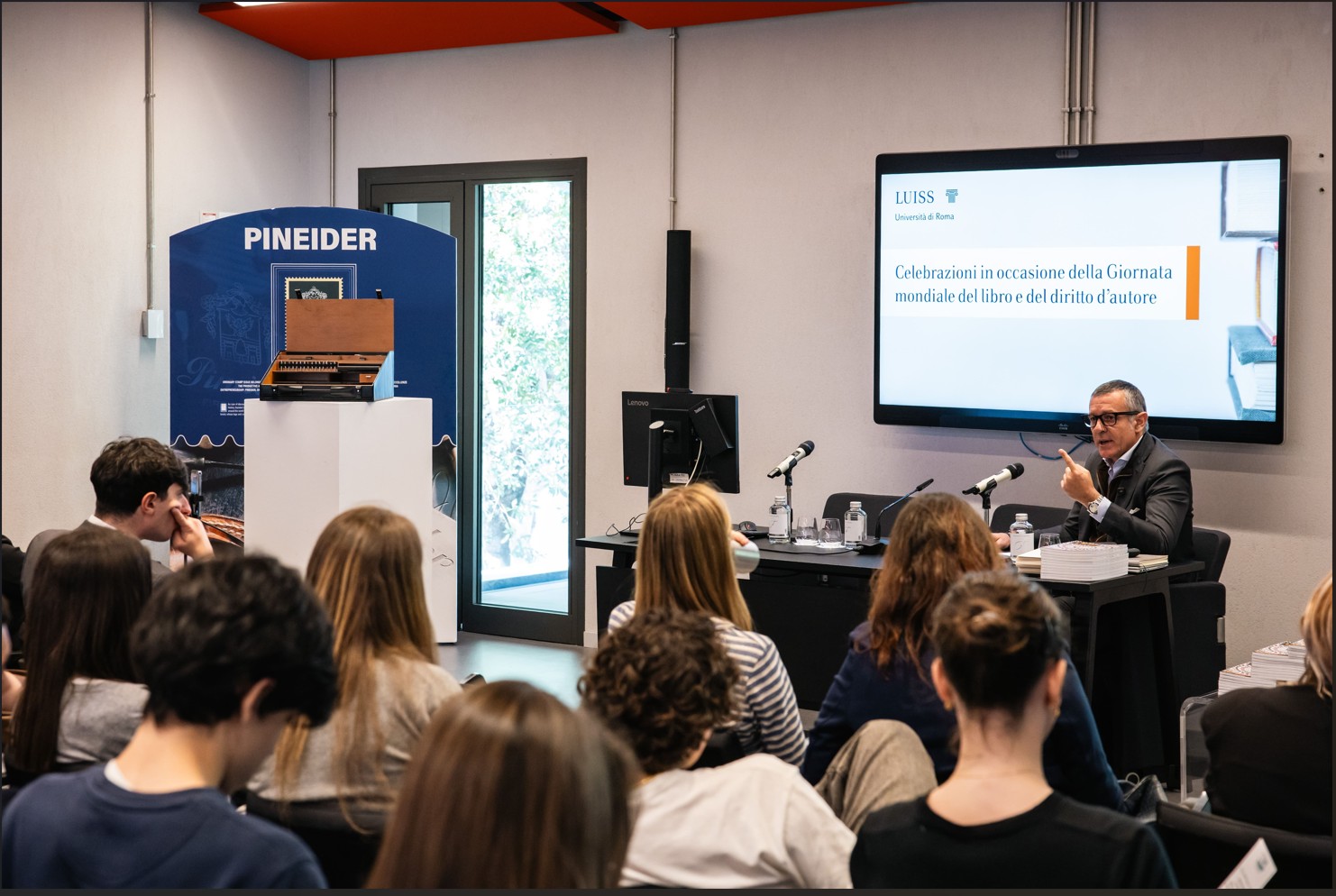
16 April 2026At LUISS Guido Carli in Rome, a striking exhibition transforms one of the smallest tools of communication into a powerful expression of identity. “Made in Italy in Stamp Format,” created in collaboration with Poste Italiane, celebrates the excellence of Italian culture, industry, and creativity through the evocative language of philately. Far beyond mere collecting, the postage stamp has always been a keeper of collective memory—an object capable of traveling across borders while carrying the essence of a nation. This exhibition captures its deeper meaning, offering a journey through the stories that have shaped Italy’s global reputation. Within this narrative, Pineider stands alongside a distinguished selection of leading names: from icons of design and innovation such as Bialetti and Ducati, to cultural symbols like the Riace Bronzes, and globally renowned champions of Italian excellence including Gucci and Ferrero. Each of the sixteen exhibition panels pairs an enlarged philatelic issue with a representative object, creating a dialogue between image and material culture. In this context, Pineider’s presence carries particular significance. Founded in Florence in 1774, the maison has long embodied the art of writing as both a personal gesture and a cultural act, transforming paper into a space for expression, memory, and style. The stamp dedicated to Pineider thus becomes more than a tribute: it symbolizes a continuity between tradition and modernity, between the intimacy of handwritten words and their enduring value in an increasingly digital world. Open to the public over two weekends in April, the exhibition invites students, visitors, and enthusiasts to rediscover the value of small things—those that, like a fine sheet of paper or a handwritten letter, preserve a sense of permanence. In an age defined by speed and ephemerality, Pineider’s presence within this philatelic journey reaffirms a fundamental truth: true luxury lies not only in what endures, but in what continues to be written, shared, and remembered. Aggiungi ai preferiti
Pineider and LUISS: When Craftsmanship Meets Contemporary Thought
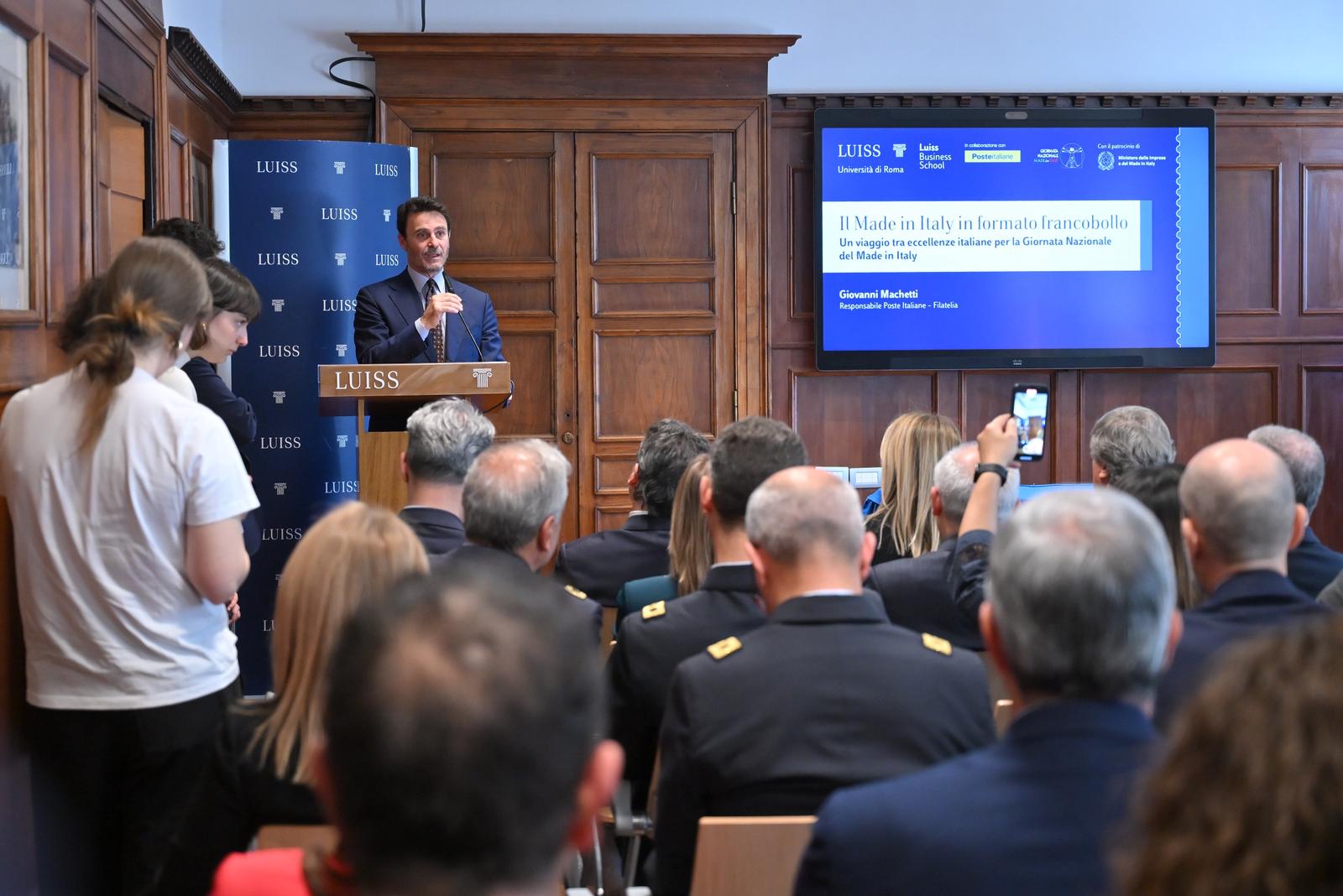
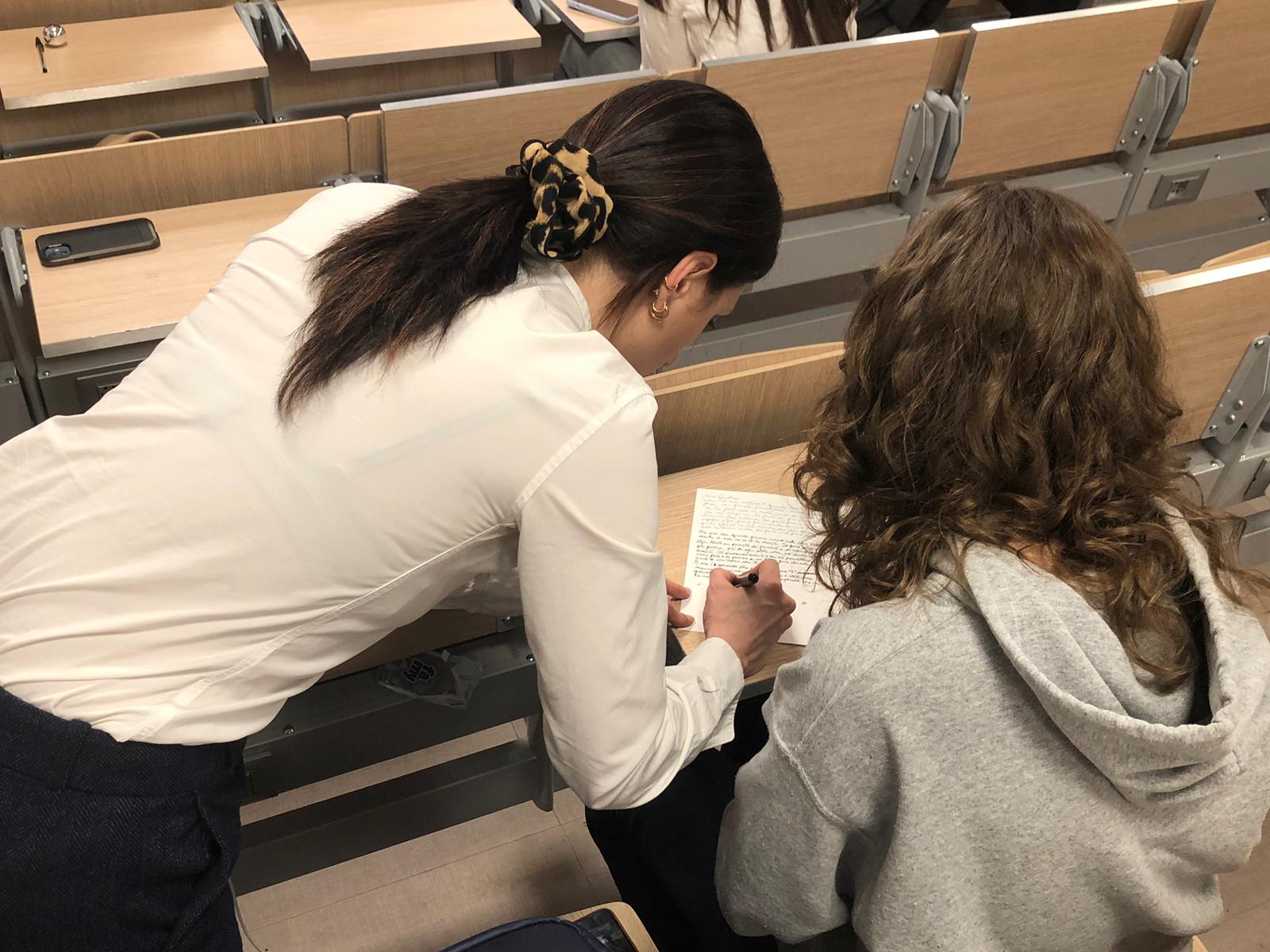
1 April 2026There is a precise moment when tradition ceases to be memory and becomes future. It is within this subtle and fertile space that the collaboration between Pineider and LUISS Guido Carli takes shape: a project that goes beyond the transmission of skills, building an authentic dialogue between craftsmanship, culture, and new generations. Founded in 1774, Pineider has always been the custodian of a savoir-faire that spans centuries without losing its identity. On the other side, LUISS represents a place of education and vision, where the present is explored through an open and international perspective. The meeting between these two realities is therefore not accidental, but deeply natural: a point of convergence between experience and research, between gesture and thought. More than an educational initiative, this collaboration takes the form of an experiential journey. Students are involved in a series of workshops centered on the value of making, understood as a tangible expression of Italian culture. The first session, dedicated to the art of calligraphy, offered an immersion into one of the most ancient and defining gestures of writing: slow, intentional, and deeply human. A gesture that Pineider preserves and renews, transforming it into a contemporary language. The next session will instead focus on business etiquette, a theme that today carries a renewed meaning. No longer merely a set of formal rules, but a cultural code that defines how we relate, communicate, and create value in the professional world. Once again, Pineider interprets a style that embodies both elegance and substance, form and content. The project reaches one of its most significant moments in the exhibition organized by LUISS on the occasion of Giornata Nazionale del Made in Italy. An exhibition open to the public, designed to narrate Italian craftsmanship through objects and stories that embody its essence. In this context, Pineider presents two symbols of its identity: the stamp and the writing desk. Two elements that encapsulate a universe of meanings—communication, memory, and connection—and demonstrate how an object can become culture. The dialogue will continue with a talk dedicated to the value of writing in the contemporary world, developed in collaboration with Premio Campiello. An opportunity for exchange between different worlds—academic, literary, and entrepreneurial—united by the awareness that writing, now more than ever, means leaving a mark. This collaboration represents far more than a joint initiative: it is a model of relationship between business and education, where the heritage of Made in Italy is not only preserved, but reinterpreted through new sensibilities. Pineider and LUISS share an evolved vision, capable of speaking to the present without losing connection to their roots. Aggiungi ai preferiti
Pineider at Casa Cipriani: the art of writing meets the finest hospitality
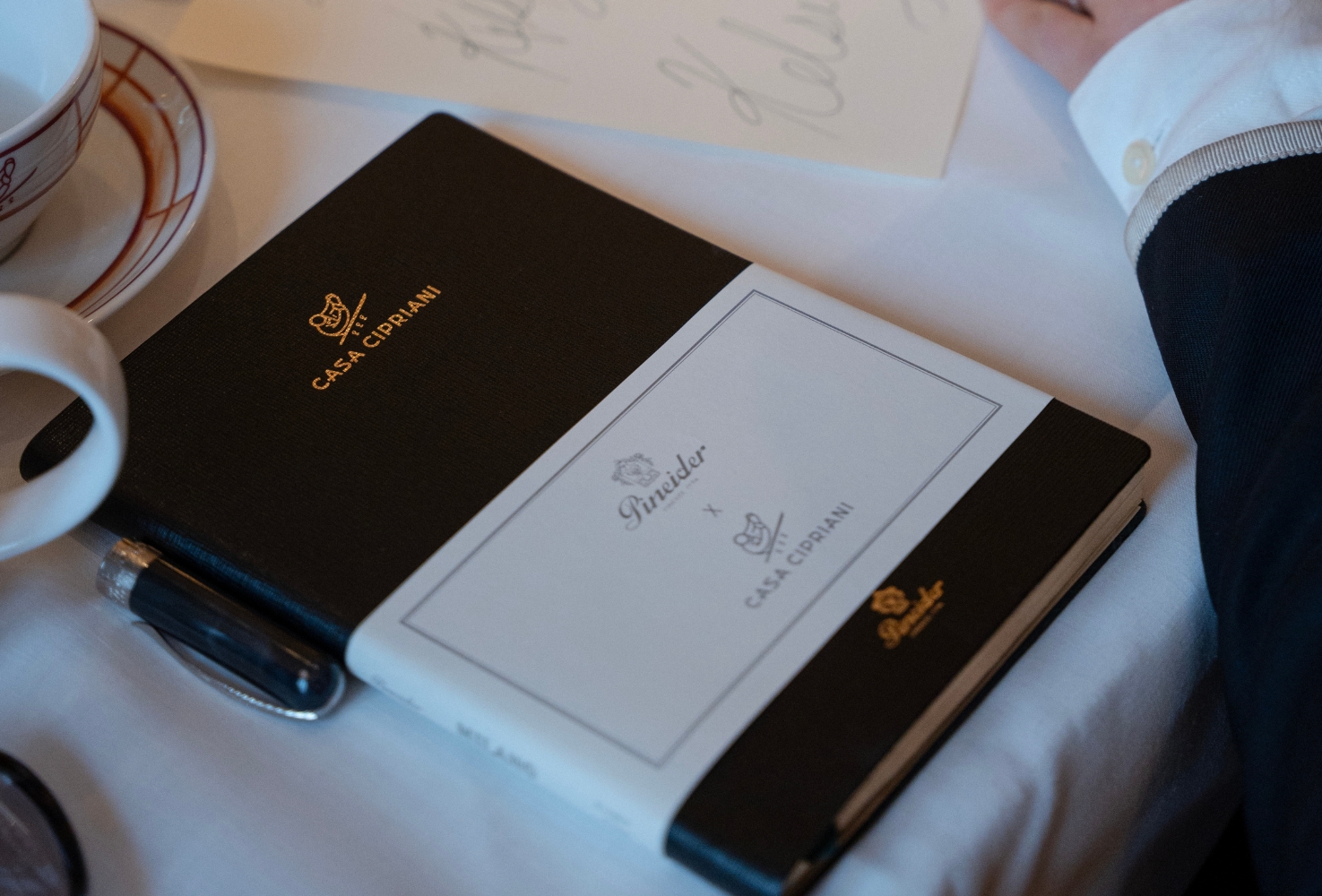
30 March 2026Some collaborations arise from a natural affinity. Such is the case with the meeting between Pineider and Casa Cipriani: two worlds that share the same vision of elegance, attention to detail, and a hospitality that places the human experience at its very heart. Over recent months, this collaboration has taken shape across several cities around the world, bringing the culture of writing into some of the most iconic addresses in international hospitality. At Casa Cipriani Milan, the co-branded Pineider notebooks have become a quietly coveted presence in the house shop, proving a remarkable success both among hotel guests — the property being open to non-members as well — and among club members alike. An object that distils the essence of both worlds: understated, refined, and conceived to accompany moments of reflection and creativity. At Casa Cipriani New York, the Pineider notebooks find their place as gifts dedicated to VIP clients, members, and guests of the rooms with their spectacular views — a gesture of thoughtfulness and care towards the most loyal of guests. Two Italian names that, wherever in the world they meet, speak the same language: that of beauty without haste. Aggiungi ai preferiti