Pineider x Marlè Magazine: Paper as a Form of Connection
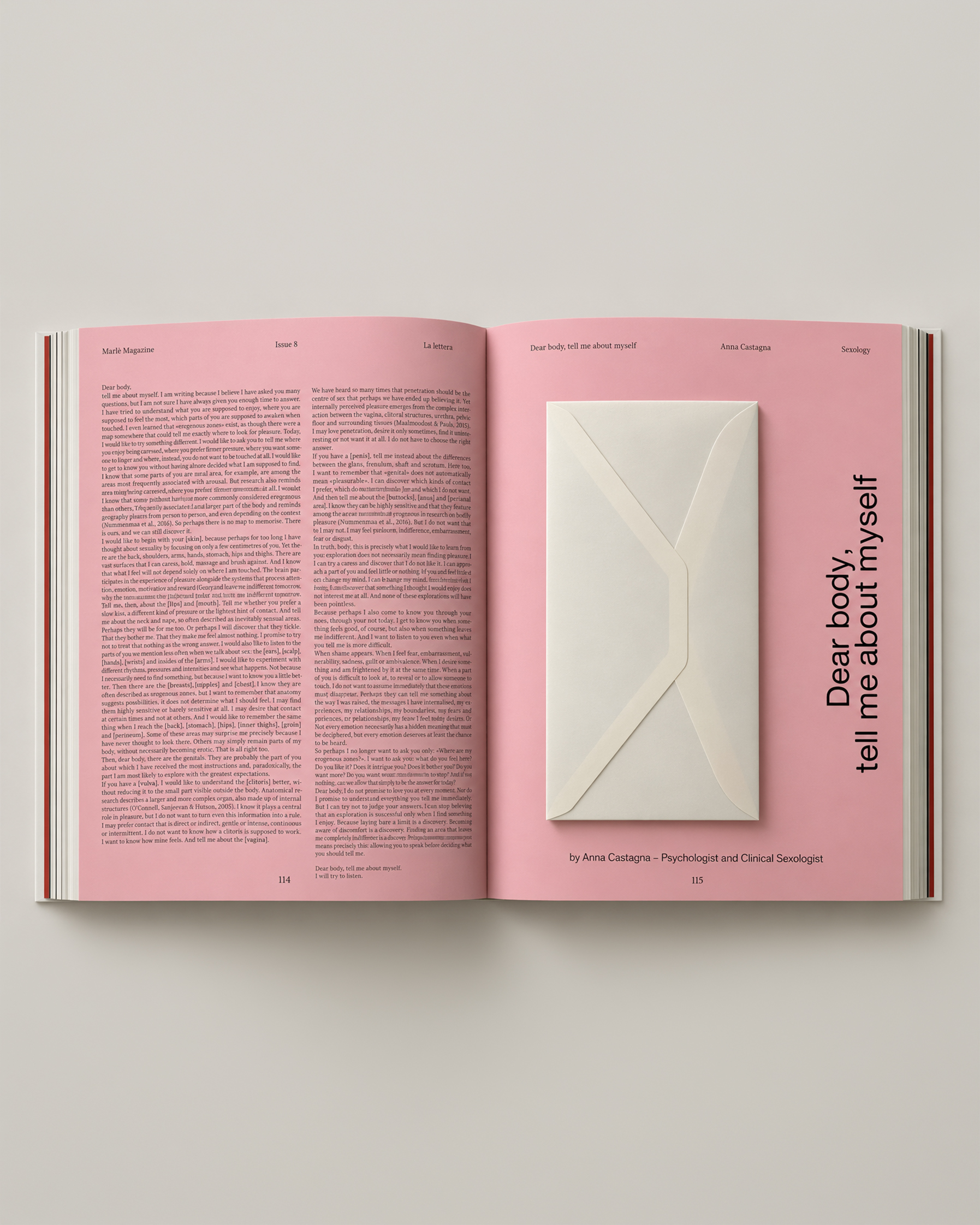
9 October 2026A tribute to the envelope: to its shape, to the paper it’s made of, to the gesture of opening it, and to the even older gesture of entrusting a thought meant for someone else to a sheet of paper. It is in this spirit of gratitude that the collaboration between Pineider and Marlè Magazine was born. A magazine devoted to psychology and sexology, Marlè chose to dedicate its latest issue to letters, in their most intimate and tangible sense: epistles, messages committed to writing, words that travel across a distance to reach someone. For the occasion, Marlè chose to interpret the letter not only through its content, but also through the material that has always belonged to it: paper. A Cover You Can Touch The result is a one-of-a-kind cover, designed not just to be looked at, but to be touched. Embossed into the cover stock is the outline of a Pineider envelope. It’s a simple, instantly recognizable mark that turns the magazine’s surface into something closer to a keepsake than an ordinary cover. The envelope becomes both image and evocation: it calls to mind the act of writing, sealing a letter, slipping it into its envelope, and placing it, at least in spirit, into someone else’s hands. Inside the Magazine, Paper Becomes Part of the Story The collaboration continues inside the magazine, where actual Pineider envelopes have been tucked between the pages. It’s a choice that perfectly reflects the theme of this issue of Marlè. Because talking about letters means talking about a form of communication that goes beyond words. The handwriting matters, the paper matters, the time spent writing matters, what’s inside the envelope matters, and even what’s left out. Psychology, Intimacy, and the Culture of Paper The dialogue between Pineider and Marlè Magazine grows out of a shared idea: writing as a space for connection. Pineider brings to the collaboration a heritage rooted in paper, craftsmanship, and the tools through which writing takes shape. Marlè approaches the letter through the lens of psychology and sexology, exploring what happens when words become a way to tell our stories, to desire, to confess, to remember, and to connect with another person. Two different perspectives meet around one simple gesture: putting something in writing and giving it to someone. Perhaps that is the most compelling detail of the collaboration with Marlè. The Pineider envelope, embossed on the cover and physically present between the pages, is more than a graphic element or a nod to the world of fine stationery. It is the symbol of a passage: the one that carries a thought from one person to another. Aggiungi ai preferiti
Drawing Florence: Gesture, Material, Beauty
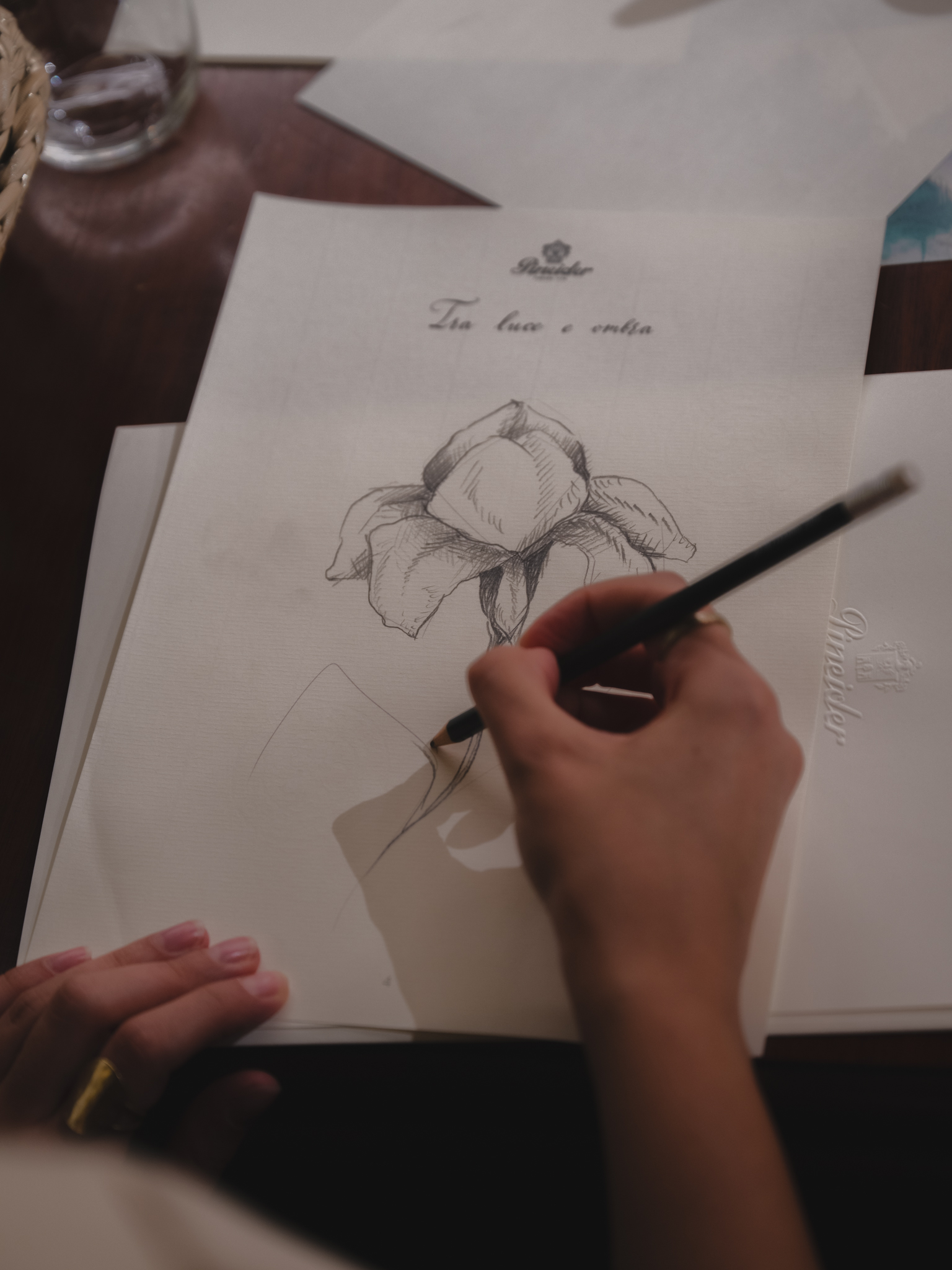
For BIAF, the Florence International Biennale of Antiques, Pineider chose to begin with an image that never became reality, and that, for precisely that reason, still speaks to the power of imagination: Michelangelo’s design for the façade of the Basilica of San Lorenzo. A vision that never left the page. A building that was never built, yet still bears witness to one of drawing’s most profound purposes: giving shape to a thought and turning an intuition into a possibility. This is the starting point for a journey devoted to drawing as gesture, as an exercise in observation, and as the first expression of every creative process. From Michelangelo’s Vision to the Act of Drawing Michelangelo’s design for the San Lorenzo façade belongs to Florence’s extraordinary history, in which art, architecture, and craftsmanship are in constant conversation. Although the façade he envisioned was never completed, his drawings preserve the full force of an idea. On paper, lines and proportions become the space where something that doesn’t yet exist can be imagined, studied, and, at least in theory, built. Discovering the Symbols of Florence Building on this idea, Pineider invited clients, select partners, and guests of International Motors Firenze to take part in an experience devoted to the city and its symbols, led by Florentine illustrator Alice Campanini. The journey invited participants to rediscover Florence through drawing, with a special focus on the tradition of botanical illustration. Among the chosen subjects was a symbol deeply tied to the city: the iris. A fixture of Florentine imagery for centuries, the flower became the starting point for a workshop in which participants observed, sketched, and interpreted nature with their own hands. Pencil, Paper, and Time The experience created for BIAF brings something essential back to the center: the pleasure of making things by hand. It’s an approach that runs through centuries of Florentine culture and still finds its place today. For Pineider, telling the story of Florence also means this: rediscovering a culture of making in which beauty isn’t just the end result, but lives in every step of the process. In the paper, in the pencil, in the hand. In the time spent observing, imagining, and creating. Aggiungi ai preferiti
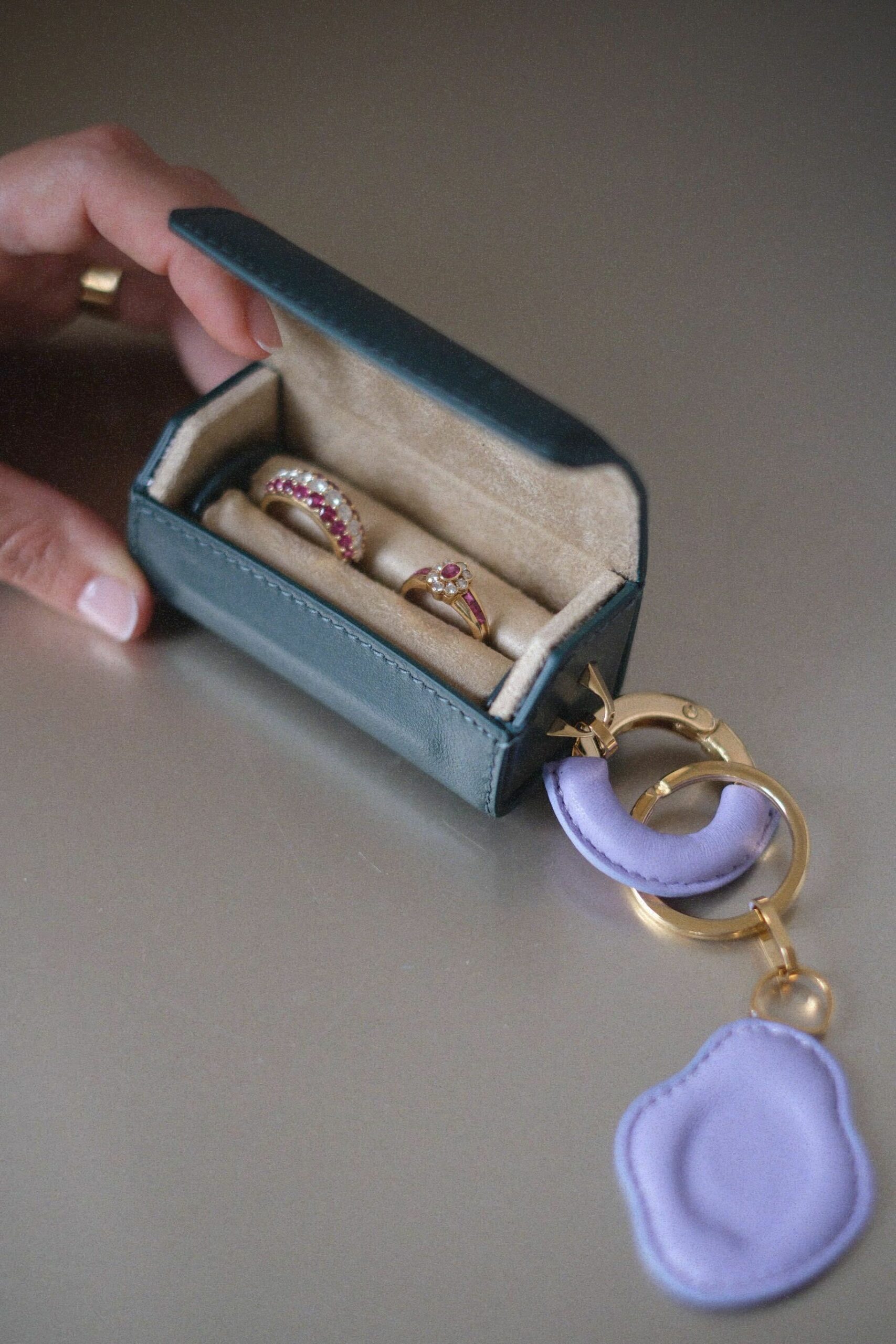
Pineider 1774 and ÂGÉE team up on a limited-edition ring case: a small keepsake box that leaves the dresser behind and goes wherever your jewelry goes.
Some things you buy, and some things you keep. A ring passed down through the family, a vintage find you stumbled on by chance, a gift that marks a moment: jewelry like this carries more meaning than it lets on. The keepsake box has always been there to protect it. But why should it stay shut away in a drawer? That question sparked a meeting between two worlds that are less far apart than they might seem. On one side is Pineider 1774, the Florentine house that has practiced the art of leathercraft since the eighteenth century, built on precise handwork and carefully chosen materials. On the other is ÂGÉE, a contemporary label that sources and curates vintage jewelry and one-of-a-kind pieces, giving each one back its story and its character. What unites them is a shared belief: the best objects are the ones that last, that grow more valuable over time, and that eventually become part of the life of the person who chose them. A Keepsake Box for the Road The result of the collaboration is a compact ring case designed to travel with its owner. Inside, soft removable cushions hold your rings securely; outside, a leather-wrapped clasp lets you clip it onto your bag. An object once meant to sit on a nightstand becomes an accessory you carry with you from morning to night. And when you’re not carrying rings? Simply remove the cushions and the case becomes a lipstick holder, ready for a quick touch-up. Leather, Silk, and Sealing Wax The conversation between the two brands comes through in the details. Pineider leather meets a silk scarf signed by ÂGÉE, which wraps around the case and defines its look through the interplay of contrasting textures. The finishing touch is a leather charm inspired by Pineider’s iconic sealing wax, a nod to the art of letter writing, which can be personalized with your initials. A seal, quite literally, that makes every piece one of a kind. Everyday Luxury Versatile, beautifully made, and easy to make your own, the Pineider 1774 × ÂGÉE ring case embodies a kind of everyday luxury that’s less about showing off and more about living with the things you love. It bridges the artisanal heritage of a historic house with a fresh approach to jewelry and to the objects we carry with us. Where to Find It Available in a limited edition starting October 8, 2026, for €170, through both brands’ online stores and at Pineider boutiques in Florence, Milan, and Rome, where it can be personalized with your initials. Aggiungi ai preferiti
Pineider and Dolce Vita Ladies Club: A Workshop in Milan Between Paper, Leather and Memory
9 September 2026Last August 29th, Milan became a meeting point between paper, leather, creativity and memory, on the occasion of a Pineider workshop held in collaboration with Dolce Vita Ladies Club. The true protagonists of the experience were these two materials themselves, paper and leather, genuine creative elements capable of transforming, page after page, into personal stories. Guiding participants through this creative journey was artist Yansu Wang, who has long been part of Pineider’s path through her junk journaling workshops, born as an invitation to pause, observe, collect and choose. To give new meaning to what usually goes unnoticed. It is from this idea that the workshop was born, organized by Pineider last August 29th in Milan in collaboration with Dolce Vita Ladies Club, an international community bringing together women united by a passion for beauty, culture, personal growth and authentic experiences. For the occasion, guests were guided by Yansu Wang in creating a picture diary: a personal story built through images, paper and small leather elements, materials chosen as true creative protagonists, capable of holding a memory or telling a moment. Paper and Leather as a Space for Self-Expression The workshop led participants to rediscover paper and leather not simply as surfaces to write on, but as creative elements in their own right: living matter, open to memory and personal expression. Under Yansu Wang’s guidance, images, paper and leather found new connections, transforming page after page into personal compositions. The act of cutting, layering, gluing and composing gave life to diaries that were all different from one another, each an expression of an individual sensibility and story, in which paper and leather become the very language of the narrative. This is precisely at the heart of Yansu Wang’s research: transforming fragments of everyday life into visual narratives. Her practice, developed through collage, paper, pop-ups and reclaimed materials, explores themes such as memory, identity and intimacy, with paper always at the center as the primary material of expression. A Language That Unites Pineider and Yansu Wang The relationship with Yansu Wang is a creative dialogue that Pineider has been cultivating for some time. The collaboration found one of its most meaningful expressions in junk journaling, a practice that starts from seemingly ordinary materials (photographs, tickets, clippings, letters, receipts and other fragments of everyday life) to transform them into something new, with paper and leather as the connecting threads. The relationship between the artist and Pineider stems precisely from the meeting of two worlds that are only seemingly distant: on one side, the tradition of paper and leather craftsmanship; on the other, a contemporary language that uses these very materials to tell experiences, emotions and memories. This encounter has already been explored through the project It’s All Paperwork, which saw Yansu Wang working with Pineider on the relationship between collage, pop-up and paper. A Moment of Creativity and Connection In Milan, the workshop became something more than a creative workshop: the time devoted to journaling, between paper and leather, created a space for sharing and connection, in keeping with the philosophy of Dolce Vita Ladies Club: creating occasions where beauty, relationships and personal growth can come together. Each page became a small exercise in attention: choosing an image, pairing two papers, working a fragment of leather, leaving room for a memory. Simple gestures that, once brought together, can transform into a surprisingly personal narrative, with paper and leather as the true protagonists of the entire creative experience. Aggiungi ai preferiti

The 2027 Diary: Writing the Future, Page by Page
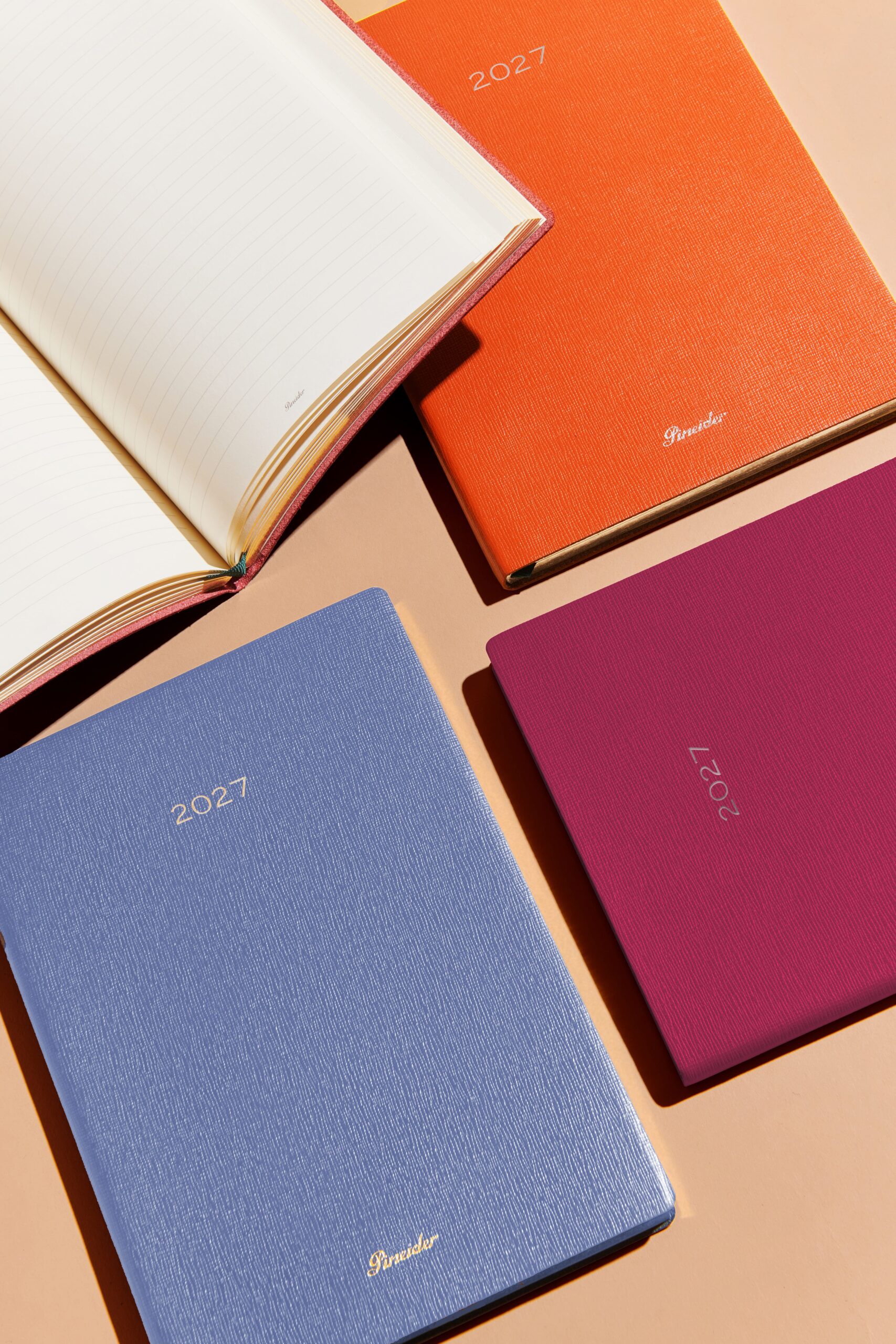
3 September 2026Every diary is born to accompany us into the future. Its pages gather appointments, projects, ideas, journeys, encounters. They are a space still waiting to be filled, a promise of what’s to come, but also a treasure chest in which to keep a story. This is the meaning behind Pineider’s new 2027 diaries: not simply tools for organizing time, but objects through which to discover the story of the brand, which began in Florence in 1774 and has continued to the present day. Over the course of the year, week after week, the diary accompanies its user on a journey through some of the moments that have shaped Pineider’s identity. A story made of paper, writing, craftsmanship, and innovation, but also of people, places, journeys, and transformations. Because to speak of a diary is to speak of time. And Pineider has been writing that time for over 250 years. 1774: The Beginning of a Story The story begins in 1774, when Francesco Pineider, originally from Pinei in Val Gardena, leaves the mountains and arrives in Florence. It’s a significant journey—not just in terms of distance, but in life itself. Francesco finds himself before a vibrant, cosmopolitan city, frequented by artists, intellectuals, merchants, and travelers. Florence is one of the essential stops on the European Grand Tour and represents a prime destination for those in search of culture, art, and beauty. It is here, in the heart of the city, that Francesco opens his first shop, in Piazza della Signoria. From the very beginning, Pineider becomes linked to a world in which writing is not merely a necessity, but a form of expression, relationship, and identity. Stationery, engravings, writing instruments, and everyday objects gradually become part of the shop’s offerings. It’s a calling that, over the centuries, will never change in its essence: creating tools to give shape to words and preserve them through time. When Writing Begins to Travel Throughout the nineteenth century, Florence changes, as does the way people travel and communicate. Pineider grows alongside the city and its international public. Paper increasingly becomes a tool for narrating the world: maps, guides, postcards, and printed materials accompany the birth of modern tourism. Writing leaves studies and drawing rooms and begins to travel. This is a pivotal shift for Pineider as well, which gradually expands its offerings. The precision of engraving, the quality of printing, and the care given to paper become distinctive traits of an increasingly sophisticated production. The Florentine house’s reputation extends beyond the city and becomes firmly established among an international clientele. Pineider’s story, at its core, is also the story of a way of experiencing writing: as something that accompanies travel, work, relationships, and life’s important moments. From Paper to Leather Toward the end of the nineteenth century, another development becomes part of this story: leather goods. Bags, cases, satchels, and travel writing desks become a natural extension of writing instruments. Paper is no longer just something to be used at a desk: it can now be carried along, together with the objects needed for writing and working. It’s a transformation that anticipates one of Pineider’s most recognizable traits: the ability to bring different materials into dialogue while keeping the culture of the object and the quality of craftsmanship at the center. Paper and leather, writing and travel, tradition and innovation—these connections remain part of the brand’s identity to this day. 1966: When History Nearly Was Lost Every story goes through difficult moments; for Pineider, one of the most dramatic arrives on November 4, 1966, when the Arno River floods and Florence is struck by a devastating flood. Pineider’s headquarters in Piazza della Signoria is submerged under water and mud. Along with it, the archives, printing presses, fine papers, engravings, and a significant part of the company’s memory are damaged. It’s an enormous loss. And yet, precisely in that moment, another trait emerges that still belongs to Pineider’s identity today: the ability to carry on. From that point forward, memory takes on an even deeper meaning. It is not only what is preserved, but also what one chooses to pass down. Over Two Centuries Later, the Writing Continues Over more than 250 years, Pineider has weathered political, social, and technological transformations, all while maintaining its bond with Florence and with a culture of craftsmanship built on quality. Today the world is profoundly different from the one in which Francesco Pineider opened his shop. We communicate through screens, digital calendars, and notifications. Appointments sync automatically, and entire libraries can fit inside a single device. And yet, we keep writing; we keep seeking the pleasure of a page, the gesture of a pen on paper, the possibility of jotting down a thought and finding it again months or years later. It is precisely in this space—between the speed of the present and the value of things that endure—that the Pineider diary is born. The new 2027 Pineider diaries turn this concept into a tangible experience: their pages aren’t meant only to organize one’s days. They also tell the story of what came before. Throughout the year, Pineider’s history is retraced through chapters woven into everyday life: from 1774 to the years of the Grand Tour, from the evolution of printing to the birth of the leather goods line, all the way to the Florence flood and the brand’s international growth. So, while writing down tomorrow’s appointment, one might discover a story from over two centuries ago; while planning a trip, one might encounter the tale of when writing first began to travel; while opening a new week, one might return to a moment when everything was still to be built. And perhaps this is the truest meaning of a diary: to connect what has been, what we are living now, and what has yet to happen. An Object for Time Pineider’s philosophy stems from a simple idea, deeply tied to writing: to tell a story is to give order to time, to transform moments into a narrative.
Pineider and The Robin: An Evening Celebrating Creativity with Yansu Wang
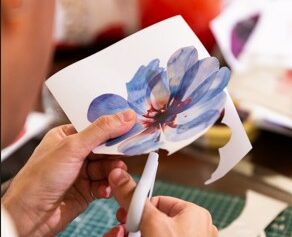
10 August 2026On July 23rd, the Pineider boutique at Via Manzoni 12 in Milan opened its doors to an experience celebrating paper as a tool for expression, memory, and connection. In collaboration with The Robin, an exclusive international community bringing together figures from the worlds of art, culture, design, and entrepreneurship, Pineider hosted a junk journaling workshop led by artist Yansu Wang. In an intimate and convivial atmosphere, guests took part in a creative journey in which fragments of paper, photographs, cutouts, letters, and small everyday objects were transformed into personal visual stories. It was an invitation to slow down, observe, and rediscover the pleasure of working with one’s hands, through an artistic practice that restores value to the stories held within objects and emotions. Yansu Wang’s work, which has always centered on the dialogue between paper, memory, and identity, guided participants in creating unique pages built from collage, three-dimensional compositions, and details capable of giving shape to memories, impressions, and imagination. Each creation thus became a personal diary—authentic and one of a kind. For Pineider, guardian of the culture of writing and paper excellence for over two centuries, hosting initiatives like this one means carrying forward a tradition that looks to the future. Paper is not merely a medium, but a meeting point between creativity, craftsmanship, and thought—capable of inspiring new forms of contemporary expression. The collaboration with The Robin helped make the evening an occasion for dialogue and sharing, bringing together a community united by a passion for beauty, culture, and authentic experiences. It was a gathering in which time devoted to creation also became time devoted to relationships, the exchange of ideas, and the discovery of new perspectives. The July 23rd event confirms the role of the Pineider boutique on Via Manzoni as a living space open to the cross-pollination of art, design, and culture—a place where the tradition of craftsmanship meets contemporary languages, and where every event becomes an opportunity to rediscover the value of gestures, materials, and the stories that tell us who we are. Aggiungi ai preferiti
Pineider and Rizzoli: From Letters to Literature
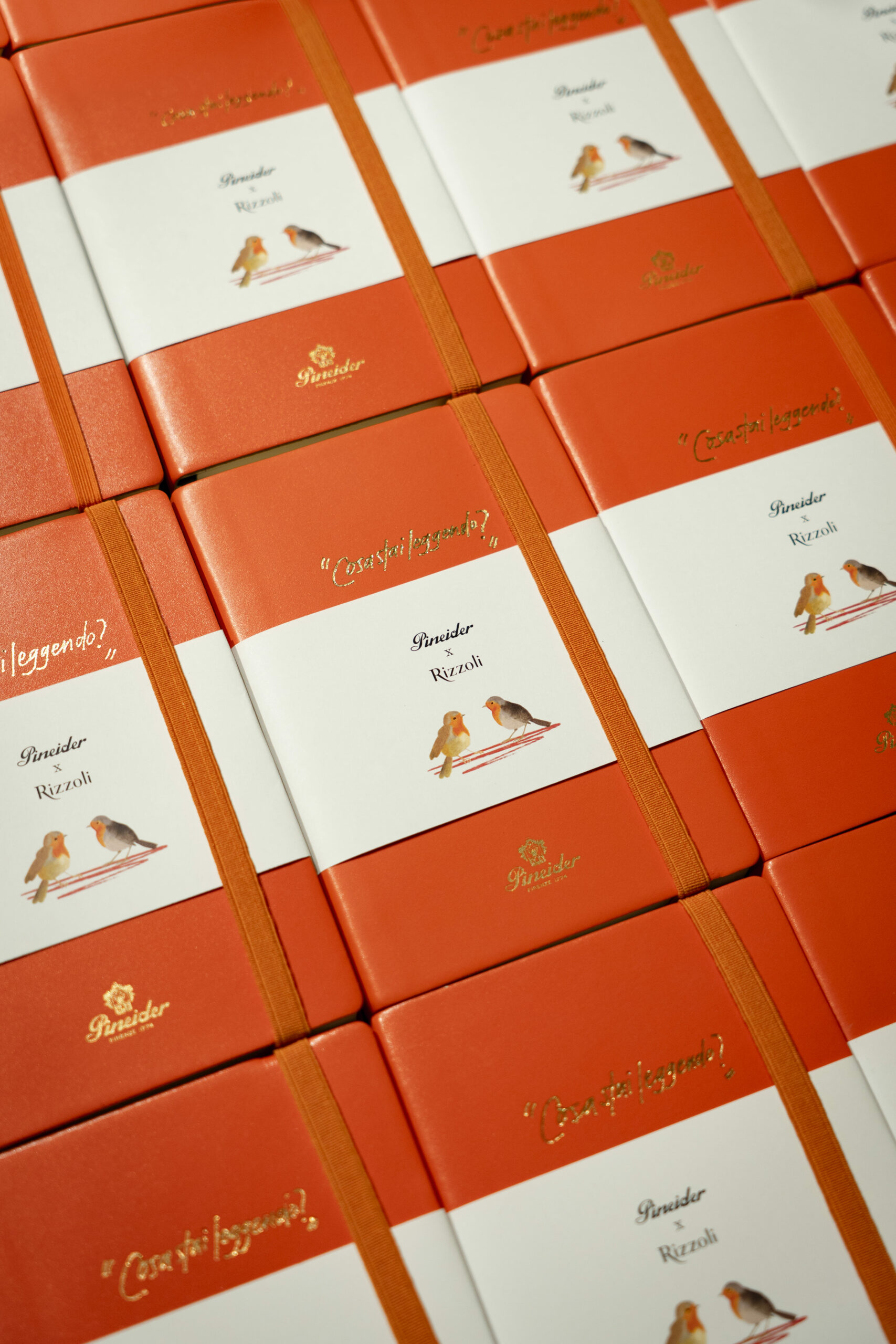
6 July 2026On July 1, Pineider’s Milan boutique hosted an exclusive event in collaboration with Rizzoli to celebrate the launch of Every Morning of Sybil by Virginia Evans. The gathering brought together creators and writing enthusiasts for an immersive experience centered on literature and the enduring pleasure of handwriting—perfectly reflecting the identity of Pineider, a Maison that for more than two centuries has celebrated Italian excellence through fine stationery, writing instruments, and leather goods. The Power of a Letter Every Morning of Sybil tells the story of a woman who, through letter writing, rediscovers an authentic way of observing the world, giving shape to her thoughts, and building meaningful relationships. In an age defined by instant communication, Virginia Evans’ novel restores value to slow writing, thoughtful reflection, and the unique ability of words to create genuine human connections. Letters become far more than a means of communication—they embody memory, intimacy, and presence. Every page is a reminder of the power of taking the time to choose each word with care and entrust it to paper. It is a message that naturally resonates with Pineider’s philosophy. For generations, the Maison has championed the art of writing as a deeply personal, aesthetic, and emotional experience. A Calligraphy Experience To bring the novel’s themes to life, Pineider and Rizzoli curated a special calligraphy experience led by Caterina Scardillo, an expert in lettering and contemporary calligraphy. Guests had the opportunity to rediscover the pleasure of the handwritten gesture, embracing the slower rhythm of writing by hand while exploring techniques that transform every word into a unique and unrepeatable expression. The workshop encouraged participants to slow down, focus on the movement of the hand, and explore the relationship between ink, paper, and thought. It was a creative moment that restored writing to its most authentic purpose: a personal form of expression capable of leaving a lasting impression. Pineider: Where Writing Meets Culture At Pineider, writing has always been considered far more than a function—it is a cultural heritage, a language that transcends time and continues to inspire new forms of expression. For this reason, the Maison regularly creates opportunities to engage with the worlds of publishing, literature, and the arts, fostering experiences that celebrate the joy of writing and storytelling. The collaboration with Rizzoli marks another chapter in this ongoing journey: a dialogue between a novel that celebrates the enduring value of handwritten letters and a brand that, through its iconic paper collections, writing instruments, and leather goods, continues to preserve and reinterpret the timeless elegance of the written word. Because even in the digital age, there are emotions that only a handwritten letter can truly convey. Aggiungi ai preferiti
Pineider Handwrites the Legacy of the Calcio Storico Fiorentino
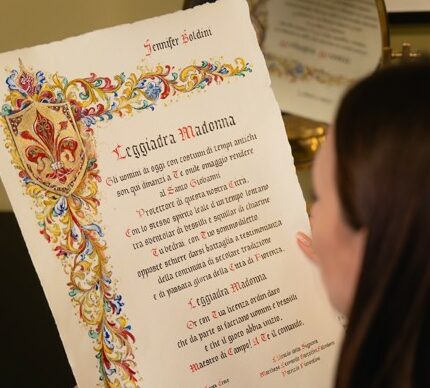
25 June 2026There are traditions that live in the roar of the crowd and the sound of drums, and others that are preserved in the quiet elegance of a single gesture. The Calcio Storico Fiorentino, one of Florence’s most authentic and deeply rooted cultural traditions, embodies both. Every June, Piazza Santa Croce is transformed into an arena where history, civic pride, and neighborhood identity converge in a spectacular reenactment whose origins date back to the Renaissance. Yet before the match begins, there is a solemn moment that prepares the stage for the spectacle: the official reading of the ceremonial parchments by the heralds. This is where Pineider enters the story. For more than two centuries, the Florentine Maison has safeguarded the art of fine writing and leather craftsmanship. Today, it is entrusted with creating the official parchments of the Calcio Storico Fiorentino—documents that accompany the ceremony and preserve its symbolic significance. Each parchment is meticulously handwritten by Pineider’s calligrapher, Caterina Scardillo, through a process that combines technical mastery, artistic sensitivity, and profound respect for tradition. The words proclaimed by the heralds before the players and spectators thus take shape on one-of-a-kind manuscripts, written according to the ancient art of calligraphy. They are far more than ceremonial documents: they are handcrafted works that restore writing to its original purpose—as a testament, a vessel of memory, and a means of cultural transmission. In an age defined by speed and instant communication, the collaboration between Pineider and the Calcio Storico Fiorentino carries a particularly meaningful message. Both represent a Florence that continues to celebrate artisanal knowledge, the beauty of the human gesture, and traditions that have endured for centuries. The Calcio Storico is not simply a sporting event; it is a living cultural heritage that renews, year after year, the bond between the city and its history. The Renaissance costume parade, the heralds, the banners, and the rituals preceding each match all contribute to preserving a collective memory that lies at the very heart of Florence’s identity. In much the same way, Pineider continues to preserve and reinterpret a heritage deeply rooted in the culture of paper and writing. Through the work of Caterina Scardillo, the parchments of the Calcio Storico become the meeting point of two Florentine legacies: the written word and the city’s civic memory. Because before the contest begins, before the game, before the emotion of the square unfolds, there is always a story waiting to be told. And every story worthy of being passed down deserves to be written by hand. Aggiungi ai preferiti
Pineider People: Caterina Scardillo and the Enduring Beauty of the Written Gesture
18 June 2026In the fourth episode of Pineider People, we meet Caterina Scardillo, a calligrapher, lettering artist, and scholar of historical scripts. A profession born from a fascination with the form of letters, yet rooted in something far deeper: the desire to understand the timeless relationship between human beings and the written word. (scardillo.com) In an age dominated by speed, Caterina has chosen a different path—one shaped by slowness, observation, and daily practice. Every stroke of the pen demands attention; every letter emerges from a delicate balance of gesture, rhythm, and intention. In this way, calligraphy becomes much more than a technique: it becomes an exercise in presence. Her story reminds us that handwriting is not merely a means of communication, but a language capable of expressing identity, memory, and culture. Through her studies in paleography and historical scripts, Caterina has dedicated years to researching the origins of the signs and letterforms we still use today, rediscovering the value of a tradition that continues to speak powerfully to the present. Every handwritten letter carries something unique and unrepeatable: a slight imperfection, a variation in pressure, an almost imperceptible nuance that reveals the presence of the person who created it. It is precisely this individuality that makes writing such a profoundly human gesture. For Caterina, the beauty of calligraphy lies in its ability to slow down time. When pen meets paper, the noise of the world seems to fade away. What remains is the mark, the breath, and the attention. An intimate moment that restores meaning not only to words themselves, but also to the way we choose to share them with others. It is no coincidence that her journey often intersects with that of Pineider. For centuries, the Maison has celebrated writing as both a cultural and personal experience—a gesture capable of transforming thoughts and emotions into something tangible and enduring. Through workshops and events dedicated to calligraphy, Caterina helps keep alive a tradition that continues to inspire and captivate new generations of enthusiasts. Her story perfectly embodies the spirit of Pineider People: the belief that the value of things lies not in their speed, but in their ability to endure. Within a handwritten page or a finely crafted leather-bound notebook coexist past and future, memory and imagination, tradition and modernity. Because writing is not simply about leaving a mark on paper. It is about leaving a trace of oneself. Aggiungi ai preferiti

ALBA: Pineider’s new pen collection celebrating the luxury of time
17 June 2026There is a moment in the day when everything slows. The light shifts gradually, the silence feels deeper, and every gesture takes on a different meaning. It is dawn — a suspended time, delicate and authentic. From this image, ALBA is born: the new collection of writing instruments by Pineider 1774. A collection that does not simply reinterpret the idea of the pen, but invites us to rediscover the very value of writing as a personal, sensory and mindful experience. In an age defined by speed and homogeneity, ALBA chooses a different direction. It chooses living material, real contact, the slow time of gestures that endure. The material as narrative: galalith At the heart of the collection is galalith — an organic material derived from milk casein, known between the late 19th and early 20th century for the creation of precious objects and art jewellery. Natural, luminous and surprisingly warm to the touch, galalith possesses a singular quality: it responds to light and craftsmanship in a way that is never the same twice. Every vein, every nuance, every detail is unrepeatable. No two pens will ever be identical. With ALBA, Pineider revives this rare material and brings it back to where it naturally belongs: writing. Not as a nostalgic exercise, but as the expression of a new idea of luxury. More understated. More personal. More authentic. Two souls, one vision ALBA represents one of the most significant projects of recent years for the Florentine maison. The collection is built around two complementary lines — Classic and Mini — which interpret the same aesthetic universe through different proportions and modes of use. The Classic line embodies the full iconic presence of the traditional pen: generous volumes, timeless elegance and a strong materiality that draws out the depth of galalith. It is designed for those who experience writing as a daily ritual — a gesture to be savoured slowly. The Mini line, by contrast, reimagines the collection in a more compact and essential form. Agile, contemporary, designed to accompany movement and everyday life without sacrificing the sophisticated, tactile character of ALBA. Small in scale, but intense in presence. The pleasure of slow gestures Every detail of the collection has been crafted to create a direct relationship with the writer. The warmth of the material between the fingers, the perfectly balanced weight, the magnetic sound of the patented Twist Magnetic Lock closure — everything contributes to transforming writing into a concrete and deeply sensory experience. Opening a pen, closing it slowly, feeling the contact of the surface, letting the ink flow across the paper. ALBA is born from precisely this idea: restoring meaning to the gestures that ask us to take our time. Aggiungi ai preferiti